뒤로
뒤로
문제 27d
What type of interaction would you expect between the side chains of each of the following pairs of amino acids in the tertiary structure of a protein?
d. glutamine and arginine
문제 28b
Determine whether each of the following statements describes the primary, secondary, tertiary, or quaternary structure of a protein.
b. Peptide bonds join amino acids in a polypeptide chain.
문제 28d
Determine whether each of the following statements describes the primary, secondary, tertiary, or quaternary structure of a protein.
d. Hydrogen bonding between amino acids in the same polypeptide gives a coiled shape to the protein.
문제 29b
Determine whether each of the following statements describes the primary, secondary, tertiary, or quaternary structure of a protein.
b. Hydrogen bonds form between adjacent segments of the backbone of the same protein to form a “folded-fan” structure.
문제 29d
Determine whether each of the following statements describes the primary, secondary, tertiary, or quaternary structure of a protein.
d. Amino acids react in a condensation reaction to form a peptide bond.
문제 30a
Myoglobin is a protein containing 153 amino acids. Approximately half of the amino acids in myoglobin have polar side chains.
a. Where would you expect these amino acid side chains to be located in the tertiary structure of the protein?
문제 30b
Myoglobin is a protein containing 153 amino acids. Approximately half of the amino acids in myoglobin have polar side chains.
b. Where would you expect the nonpolar side chains to be?
문제 33a
List the type of attractive force disrupted and the level of protein structure changed by the following denaturing treatments:
a. adding salt to soy milk to make tofu
문제 35a
Identify each of the following statements as characteristic of protein denaturation or protein hydrolysis.
a. Milk curdles when lemon juice is added to it.
문제 35b
Identify each of the following statements as characteristic of protein denaturation or protein hydrolysis.
b. A protein breaks up into amino acid fragments.
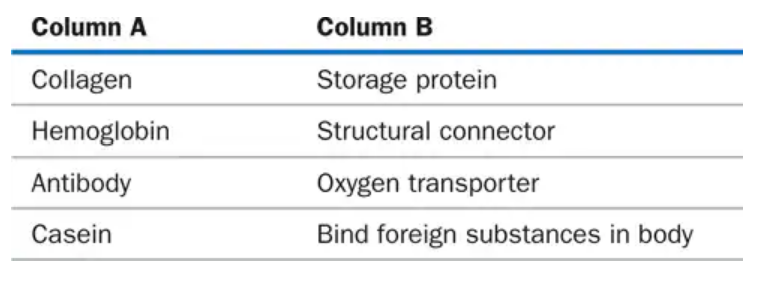
문제 37
Match each protein in column A with its function in column B:
문제 42
What is the name given to the reactant of an enzyme-catalyzed reaction?
문제 44
What is the name given to a small, organic nonprotein part of an enzyme that is involved in catalysis?
문제 49
What level of protein structure is involved in the formation of an enzyme’s active site?
문제 50
What kind of interaction attracts the cofactor Mg2+ and ATP to each other? (Hint: Look at the structure of the phosphate group.)
문제 51a
How would the following changes affect enzyme activity for an enzyme whose optimal conditions are normal body temperature and physiological pH?
a. raising the temperature from 37 °C to 60 °C
문제 53a
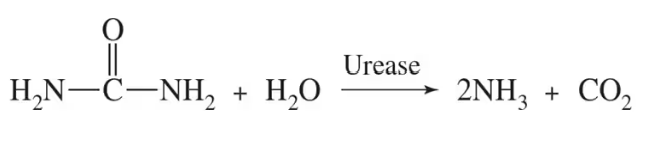
The enzyme urease functions in the body to catalyze the formation of ammonia and carbon dioxide from urea as shown:
Describe what effect the following changes would have on the rate of this reaction assuming a steady state has been reached:
a. adding excess urea
문제 54a
Indicate whether each of the following describes a competitive or a noncompetitive inhibitor.
a. The structure of the inhibitor is similar to that of the substrate.
문제 54c
Indicate whether each of the following describes a competitive or a noncompetitive inhibitor.
c. The inhibitor competes with the substrate for the active site.
문제 54e
Indicate whether each of the following describes a competitive or a noncompetitive inhibitor.
e. Adding more substrate to the reaction restores the enzyme activity.
문제 56a
Give the name and three-letter abbreviation for the amino acid described by each of the following:
a. the nonpolar amino acid with a sulfur atom in its side chain
문제 57a
Give the name and three-letter abbreviation for the amino acid described by each of the following:
a. the polar amino acid with a benzene ring in its side chain
문제 57c
Give the name and three-letter abbreviation for the amino acid described by each of the following:
c. the polar amino acid with a sulfur atom in its side chain
문제 60d
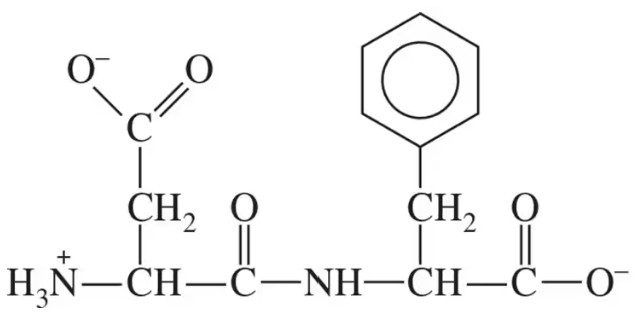
Aspartame, which is commonly known as NutraSweet™, contains the following dipeptide:
d. Draw the structure of the isomer of this dipeptide where the C-terminal and N-terminal amino acids are switched.
문제 64
Draw the structure of the possible dipeptides formed from one alanine combining with one cysteine.
문제 65b
Consider the amino acids glycine, proline, and lysine.
b. Using three-letter abbreviations for the amino acids, give the sequence for each of the possible tripeptides.
문제 67b
Would you expect to find this segment at the center or on the surface of a globular protein? Why?
문제 68
Name the covalent bond that helps to stabilize the tertiary structure of a protein.
문제 69b
Identify some differences between the following pairs:
b. complete and incomplete proteins
문제 71b
Identify the level of protein structure associated with each of the following:
b. hydrogen bonding between backbone atoms