Ch.4 Molecular Compounds
McMurry - Fundamentals of General, Organic, and Biological Chemistry 8th Edition
McMurry8th EditionFundamentals of General, Organic, and Biological ChemistryISBN: 9780134015187당신이 사용하는 게 아니라요?교과서 변경
4장, 문제 90d

The phosphonium ion, PH4+ is formed by reaction of phosphine, PH3, with an acid.
d. Explain why the ion has a +1 charge.

검증된 단계별 안내
1
Start by identifying the reactants: phosphine (PH₃) and an acid. Phosphine is a neutral molecule, and acids typically donate protons (H⁺ ions) in chemical reactions.
Understand the process of proton donation: When the acid donates a proton (H⁺), it is accepted by the phosphine molecule. This results in the formation of the phosphonium ion (PH⁺₄).
Examine the electron count: Phosphine (PH₃) has a lone pair of electrons on the phosphorus atom. When it accepts the proton (H⁺), the lone pair is used to form a bond with the proton, creating PH⁺₄.
Analyze the charge distribution: The proton (H⁺) carries a positive charge. Since phosphine is neutral, the addition of a positively charged proton results in the overall charge of the phosphonium ion being +1.
Conclude the explanation: The +1 charge on the phosphonium ion arises because the neutral phosphine molecule gains a positively charged proton during the reaction, without losing any electrons to counterbalance the added positive charge.

비슷한 문제에 대한 검증된 영상 답변:

이 영상 해법은 위 문제에 도움이 된다고 튜터들이 추천한 것입니다.
영상 길이:
2m
도움이 되었나요?

주요 개념

질문에 올바르게 답하기 위해 반드시 이해해야 하는 핵심 개념들은 다음과 같습니다.

Phosphonium Ion

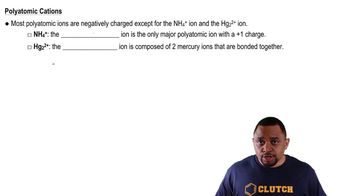
A phosphonium ion, such as PH⁺₄, is a positively charged species formed when phosphine (PH₃) reacts with a proton (H⁺). In this reaction, the phosphine molecule donates a lone pair of electrons to the proton, resulting in the formation of the ion. This process is similar to the formation of ammonium ions from ammonia.
추천 영상:
가이드 코스
01:16
Polyatomic Ions

Charge of Ions

The charge of an ion is determined by the difference between the number of protons and electrons. In the case of PH⁺₄, the ion has one more proton than the number of electrons, leading to a net positive charge of +1. This charge indicates that the ion is electron-deficient, which is a characteristic of cations.
추천 영상:
가이드 코스
01:16
Polyatomic Ions

Acid-Base Reaction

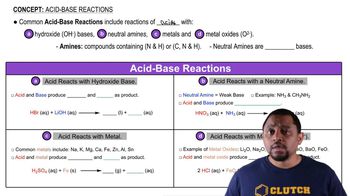
An acid-base reaction involves the transfer of protons (H⁺ ions) from an acid to a base. In this context, phosphine acts as a base that accepts a proton from an acid, resulting in the formation of the phosphonium ion. Understanding this reaction is crucial for grasping how the charge of the resulting ion is established.
추천 영상:
가이드 코스
03:08
Acid-Base Reactions Concept 1