Ch.15 Aldehydes and Ketones
McMurry - Fundamentals of General, Organic, and Biological Chemistry 8th Edition
McMurry8th EditionFundamentals of General, Organic, and Biological ChemistryISBN: 9780134015187당신이 사용하는 게 아니라요?교과서 변경
15장, 문제 7

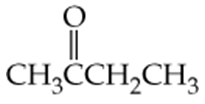
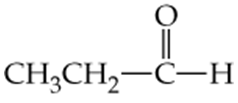
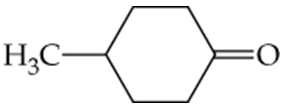
For each compound shown next (a–d), indicate whether the compound is polar or nonpolar, and whether it is soluble or insoluble in water.
a.
b.
c. CH3CH2CH2CH2CH3
d.

검증된 단계별 안내
1
Step 1: Understand the concept of polarity. A molecule is polar if it has an uneven distribution of electron density, resulting in a dipole moment. Nonpolar molecules have an even distribution of electron density and no dipole moment.
Step 2: Analyze the molecular structure of each compound (a–d). Look for factors such as electronegativity differences between atoms, the presence of polar bonds, and the molecular geometry to determine if the compound is polar or nonpolar.
Step 3: Recall the solubility rule: 'like dissolves like.' Polar compounds are generally soluble in polar solvents like water, while nonpolar compounds are typically insoluble in water.
Step 4: For each compound (a–d), identify functional groups or structural features that influence polarity and solubility. For example, hydroxyl (-OH) groups increase polarity and solubility in water, while long hydrocarbon chains tend to be nonpolar and insoluble.
Step 5: Summarize the findings for each compound (a–d), indicating whether it is polar or nonpolar and whether it is soluble or insoluble in water based on the analysis of its structure and functional groups.

비슷한 문제에 대한 검증된 영상 답변:

이 영상 해법은 위 문제에 도움이 된다고 튜터들이 추천한 것입니다.
도움이 되었나요?

주요 개념

질문에 올바르게 답하기 위해 반드시 이해해야 하는 핵심 개념들은 다음과 같습니다.

Polarity

Polarity refers to the distribution of electrical charge over the atoms in a molecule. A polar molecule has a significant difference in electronegativity between its atoms, leading to a dipole moment, while nonpolar molecules have an even distribution of charge. Understanding polarity is crucial for predicting how compounds interact with water, as polar substances tend to be soluble in water, while nonpolar substances are not.
추천 영상:
가이드 코스
01:34
Molecular Polarity (Simplified) Concept 1

Solubility

Solubility is the ability of a substance to dissolve in a solvent, such as water. It is influenced by the nature of the solute and solvent, particularly their polarity. Polar solutes generally dissolve well in polar solvents (like water), while nonpolar solutes do not. This concept is essential for determining whether the compounds in the question will dissolve in water.
추천 영상:
가이드 코스
00:28
Solubility Rules

Molecular Structure

Molecular structure refers to the arrangement of atoms within a molecule, including the types of bonds and the geometry of the molecule. The structure affects both polarity and solubility; for example, the presence of functional groups can create polar regions in otherwise nonpolar molecules. Analyzing the molecular structure of the compounds is key to assessing their polarity and solubility in water.
추천 영상:
가이드 코스
00:34
Molecular Models Example 1