Ch.15 Aldehydes and Ketones
McMurry - Fundamentals of General, Organic, and Biological Chemistry 8th Edition
McMurry8th EditionFundamentals of General, Organic, and Biological ChemistryISBN: 9780134015187당신이 사용하는 게 아니라요?교과서 변경
15장, 문제 12

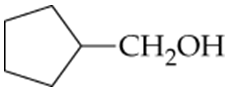
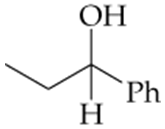
What ketones or aldehydes might be reduced to yield the following alcohols?
a.
b.
c. HOCH2–CH2–CH2OH

검증된 단계별 안내
1
Step 1: Understand the reduction process. Ketones and aldehydes can be reduced to alcohols using reducing agents like NaBH4 (sodium borohydride) or LiAlH4 (lithium aluminum hydride). The carbonyl group (C=O) is converted into a hydroxyl group (OH) during this process.
Step 2: Analyze the structure of the alcohol provided in part c: HOCH₂―CH₂―CH₂OH. This is a diol, meaning it has two hydroxyl groups (-OH). Determine the possible precursor molecule by identifying where the hydroxyl groups could have originated from a carbonyl group.
Step 3: Consider the possible ketone or aldehyde precursors. For HOCH₂―CH₂―CH₂OH, the precursor could be an aldehyde with a single carbonyl group at one end of the chain, such as CHO―CH₂―CH₂OH. Alternatively, it could be a ketone with the carbonyl group in the middle of the chain, such as CH₂=O (formaldehyde) reacting with another molecule to form the diol.
Step 4: Write the general reduction reaction for aldehydes and ketones. For aldehydes: \( RCHO + [H] \rightarrow RCH₂OH \). For ketones: \( RCOR' + [H] \rightarrow RCH(OH)R' \). Apply this concept to the alcohol structure provided.
Step 5: For parts a and b, analyze the provided images (if available) to identify the alcohol structures and reverse-engineer the possible ketone or aldehyde precursors using the same reduction principles. Match the carbon skeletons and functional groups to deduce the precursors.

비슷한 문제에 대한 검증된 영상 답변:

이 영상 해법은 위 문제에 도움이 된다고 튜터들이 추천한 것입니다.
도움이 되었나요?

주요 개념

질문에 올바르게 답하기 위해 반드시 이해해야 하는 핵심 개념들은 다음과 같습니다.

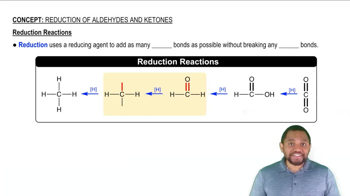
Reduction Reactions

Reduction reactions involve the gain of electrons or the decrease in oxidation state by a molecule. In organic chemistry, this often refers to the conversion of carbonyl compounds, such as ketones and aldehydes, into alcohols. Understanding the mechanisms of these reactions, including the role of reducing agents like lithium aluminum hydride or sodium borohydride, is essential for predicting the products formed.
추천 영상:
가이드 코스
2:38
Reduction Reactions Concept 1

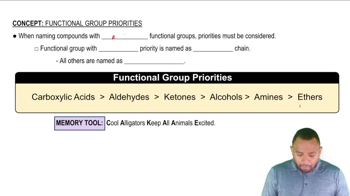
Functional Groups

Functional groups are specific groups of atoms within molecules that are responsible for the characteristic chemical reactions of those molecules. In the context of the question, ketones (with a carbonyl group, C=O) and aldehydes (with a carbonyl group at the end of a carbon chain) are key functional groups that can be reduced to form alcohols, which contain hydroxyl groups (-OH). Recognizing these functional groups is crucial for identifying potential reactants.
추천 영상:
가이드 코스
1:11
Functional Group Priorities Concept 1

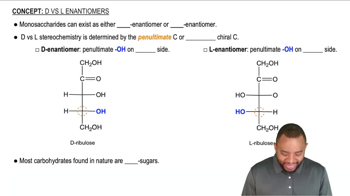
Stereochemistry

Stereochemistry refers to the study of the spatial arrangement of atoms in molecules and how this affects their chemical behavior. When reducing ketones or aldehydes, the stereochemistry of the resulting alcohols can vary, leading to different isomers. Understanding stereochemistry is important for predicting the specific alcohols that can be formed from the reduction of given carbonyl compounds, especially when chiral centers are involved.
추천 영상:
가이드 코스
1:30
D vs L Enantiomers Concept 1