
Ch. 12 - Radicals
Bruice - Organic Chemistry 8th Edition
Bruice8th EditionOrganic ChemistryISBN: 9780135213711당신이 사용하는 게 아니라요?교과서 변경
12장, 문제 37a

How many monochlorination products can be obtained from the radical chlorination of methylcyclohexane? Disregard stereoisomers.

검증된 단계별 안내
1
Identify the structure of methylcyclohexane. It consists of a cyclohexane ring with a single methyl group attached to one of the carbons.
Determine the types of hydrogen atoms present in methylcyclohexane. There are primary hydrogens (on the methyl group), secondary hydrogens (on the carbons of the cyclohexane ring), and tertiary hydrogens (if applicable, but not in this case).
Analyze the symmetry of the molecule. Methylcyclohexane has a plane of symmetry, which means equivalent hydrogens will produce identical monochlorination products.
Count the unique positions where a chlorine atom can replace a hydrogen atom. Focus on the unique carbon atoms (based on symmetry) and their attached hydrogens. For example, the methyl group hydrogens are equivalent, and the secondary hydrogens on the cyclohexane ring may differ depending on their position relative to the methyl group.
Sum up the number of unique monochlorination products by considering all unique substitution sites and disregarding stereoisomers, as specified in the problem.

비슷한 문제에 대한 검증된 영상 답변:

이 영상 해법은 위 문제에 도움이 된다고 튜터들이 추천한 것입니다.
영상 길이:
2m

주요 개념

질문에 올바르게 답하기 위해 반드시 이해해야 하는 핵심 개념들은 다음과 같습니다.

Radical Chlorination

Radical chlorination is a reaction where chlorine radicals replace hydrogen atoms in an organic molecule, typically alkanes. This process involves the formation of reactive chlorine radicals through the homolytic cleavage of Cl2, leading to a series of chain reactions that can yield multiple products. Understanding this mechanism is crucial for predicting the number of products formed during the reaction.
추천 영상:
03:03
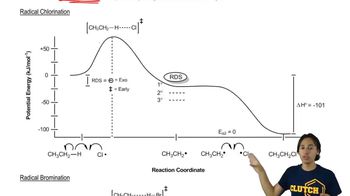
Using the Hammond Postulate to describe radical chlorination.

Monochlorination Products

Monochlorination products refer to the compounds formed when only one hydrogen atom in a molecule is replaced by a chlorine atom. In the case of methylcyclohexane, identifying the unique positions where chlorination can occur is essential to determine the total number of distinct monochlorination products, excluding stereoisomers.
추천 영상:
04:37
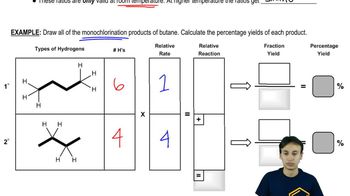
Draw all of the monochlorination products and calculate percentage yields.

Methylcyclohexane Structure

Methylcyclohexane is a cycloalkane with a methyl group attached to a cyclohexane ring. Its structure influences the reactivity and the positions available for chlorination. Recognizing the symmetry and the different hydrogen atoms available for substitution helps in calculating the potential products from the radical chlorination process.
추천 영상:
03:04
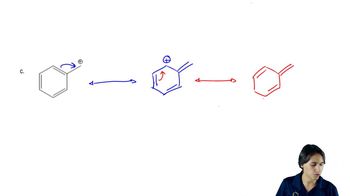
Drawing Resonance Structures