Ch. 12 - Radicals
Bruice - Organic Chemistry 8th Edition
Bruice8th EditionOrganic ChemistryISBN: 9780135213711당신이 사용하는 게 아니라요?교과서 변경
12장, 문제 37c

How many monochlorination products would be obtained if all stereoisomers are included?

검증된 단계별 안내
1
Identify the structure of the starting molecule. Determine the number of unique hydrogen atoms in the molecule that can be replaced by a chlorine atom during the chlorination process. This step involves analyzing the symmetry and the environment of each hydrogen atom.
Consider the possibility of forming stereoisomers. If the replacement of a hydrogen atom with chlorine creates a new stereocenter, then both R and S configurations must be considered as separate products.
Account for any existing stereocenters in the molecule. If the starting molecule already has stereocenters, replacing a hydrogen atom with chlorine may lead to diastereomers, which are also distinct products.
Combine the results from the previous steps to determine the total number of unique monochlorination products, including all stereoisomers. Ensure that you do not count identical products more than once.
Verify your results by drawing the structures of all possible monochlorination products, including their stereoisomers, to confirm that no products have been overlooked.

비슷한 문제에 대한 검증된 영상 답변:

이 영상 해법은 위 문제에 도움이 된다고 튜터들이 추천한 것입니다.

주요 개념

질문에 올바르게 답하기 위해 반드시 이해해야 하는 핵심 개념들은 다음과 같습니다.

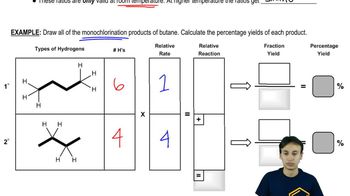
Monochlorination

Monochlorination refers to the substitution reaction where one chlorine atom replaces a hydrogen atom in an organic molecule. This process typically occurs in alkanes and can lead to the formation of multiple products due to the presence of different hydrogen atoms that can be replaced. Understanding the mechanism of monochlorination, including radical formation and the selectivity of chlorine, is essential for predicting the number of products formed.
추천 영상:
04:37
Draw all of the monochlorination products and calculate percentage yields.

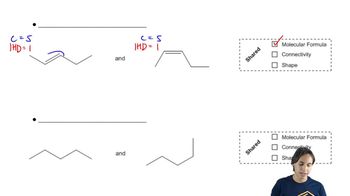
Stereoisomers

Stereoisomers are compounds that have the same molecular formula and connectivity of atoms but differ in the spatial arrangement of their atoms. This can lead to different physical and chemical properties. In the context of monochlorination, the presence of stereoisomers means that each unique arrangement can yield distinct chlorinated products, increasing the total number of products formed during the reaction.
추천 영상:
01:58
Determining when molecules are stereoisomers.

Product Distribution

Product distribution in a chemical reaction refers to the relative amounts of different products formed. In the case of monochlorination, the distribution is influenced by factors such as the stability of the resulting radicals and the sterics of the starting material. Analyzing product distribution helps in understanding how many unique monochlorination products can be generated, especially when considering all possible stereoisomers.
추천 영상:
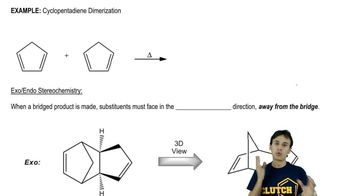
11:07
Bridged-Products