Ch. 14 - NMR Spectroscopy
Bruice - Organic Chemistry 8th Edition
Bruice8th EditionOrganic ChemistryISBN: 9780135213711당신이 사용하는 게 아니라요?교과서 변경
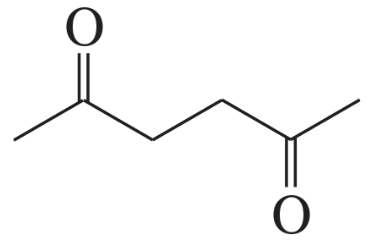
14장, 문제 41(8)

Answer the following questions for each compound:
a. How many signals are in its 13C NMR spectrum?
b. Which signal is at the lowest frequency?
8.

검증된 단계별 안내
1
Step 1: Analyze the molecular structure of the compound to determine the number of unique carbon environments. In 13C NMR spectroscopy, each unique carbon environment corresponds to a distinct signal. Look for symmetry in the molecule, as symmetric carbons will produce identical signals.
Step 2: Count the number of unique carbon environments in the compound. For example, carbons in identical chemical environments (due to symmetry or identical substituents) will produce the same signal.
Step 3: To determine which signal is at the lowest frequency (downfield), consider the electronic environment of each carbon. Carbons bonded to electronegative atoms (e.g., oxygen, nitrogen, halogens) or within electron-withdrawing groups will typically resonate at higher frequencies (downfield), while carbons in electron-rich environments (e.g., alkyl groups) will resonate at lower frequencies (upfield).
Step 4: Assign approximate chemical shift ranges to each unique carbon based on its environment. For example, sp3 carbons in alkyl groups typically appear between 0-50 ppm, sp2 carbons in aromatic rings or alkenes appear between 100-150 ppm, and carbonyl carbons (C=O) appear between 160-220 ppm.
Step 5: Identify the signal at the lowest frequency by comparing the chemical shift ranges of all unique carbons. The carbon in the most electron-rich environment (e.g., a simple alkyl group) will have the lowest frequency signal.

비슷한 문제에 대한 검증된 영상 답변:

이 영상 해법은 위 문제에 도움이 된다고 튜터들이 추천한 것입니다.
영상 길이:
6m

주요 개념

질문에 올바르게 답하기 위해 반드시 이해해야 하는 핵심 개념들은 다음과 같습니다.

13C NMR Spectroscopy

13C NMR (Nuclear Magnetic Resonance) spectroscopy is a technique used to determine the structure of organic compounds by analyzing the magnetic environment of carbon atoms. Each unique carbon environment in a molecule produces a distinct signal in the NMR spectrum, allowing chemists to infer the number of different carbon atoms present and their connectivity.
추천 영상:
04:00
13C NMR General Features

Chemical Shift

Chemical shift refers to the position of a signal in the NMR spectrum, measured in parts per million (ppm). It indicates the electronic environment surrounding a carbon atom, with lower frequency signals (downfield) typically associated with more electronegative substituents or deshielded carbons, while higher frequency signals (upfield) correspond to more shielded carbons.
추천 영상:
11:44
1H NMR Chemical Shifts

Signal Count in NMR

The number of signals in a 13C NMR spectrum corresponds to the number of distinct carbon environments in a molecule. Equivalent carbons, which are in the same electronic environment, will produce a single signal, while non-equivalent carbons will generate separate signals. This concept is crucial for deducing the molecular structure and identifying functional groups.
추천 영상:
04:35
General Assumption for 1H NMR Signals