뒤로
뒤로
문제 54a
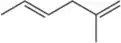
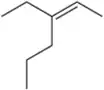
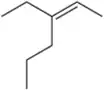
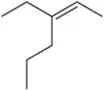
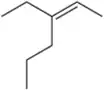
Predict the products you would get when the following alkenes undergo (i) hydroboration–oxidation (1. BH3 2. NaOH, H2O2 or (ii) oxymercuration–reduction [1. Hg(OAc)2, H2O 2. NaBH4].
(a)
문제 54b(ii)
Predict the products you would get when the following alkenes undergo (ii) oxymercuration–reduction [1. Hg(OAc)2 , H2O 2. NaBH4 ].
(b)
문제 55c
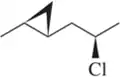
Suggest an alkene to undergo hydroboration–oxidation (1. BH3 2. NaOH, H2O2) to give exclusively the alcohols shown. Pay close attention to the relative (but not absolute) stereochemical outcome.
(c)
문제 55d
Suggest an alkene to undergo hydroboration–oxidation (1. BH3 2. NaOH, H2O2) to give exclusively the alcohols shown. Pay close attention to the relative (but not absolute) stereochemical outcome.
(d)
문제 55e
Predict the major product(s) of the following elimination reactions, paying close attention to the stereochemical outcome of the reactions.
(e)
문제 56
Unlike hydroboration–oxidation, the addition of H2O catalyzed by H3O+ is not stereospecific. Thinking carefully about the mechanism of the reaction, give two reasons why.
문제 57
The first step of oxymercuration–reduction is stereospecific, and yet this fact wasn't emphasized in that discussion. Show the stereospecificity of the first step for the following alkene and then explain why the stereospecificity becomes unimportant after the second step.
문제 58a
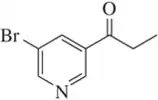
Calculate the index of hydrogen deficiency for the following molecular formulas and structures.
(a)
문제 58b
Calculate the index of hydrogen deficiency for the following molecular formulas and structures.
(b)
문제 58c
Calculate the index of hydrogen deficiency for the following molecular formulas and structures.
(c)
문제 58f
Calculate the index of hydrogen deficiency for the following molecular formulas and structures.
(f) C6H8O2
문제 59a
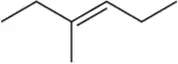
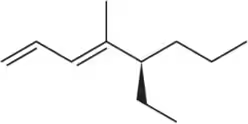
Using IUPAC rules, name the following molecules.
(a)
문제 59c
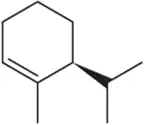
Using IUPAC rules, name the following molecules.
(c)
문제 59d
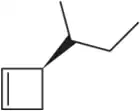
Using IUPAC rules, name the following molecules.
(d)
문제 59e
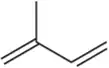
Using IUPAC rules, name the following molecules.
(e)
문제 59g
Using IUPAC rules, name the following molecules.
(g)
문제 60b
Given the name, draw the structure of the following compounds.
(b) (4Z,8R)-8-bromo-5-methylnon-4-ene
문제 60c
Given the name, draw the structure of the following compounds.
(c) (3S,6Z)-8-ethyl-3-iododeca-1,5-diene
문제 60e
Given the name, draw the structure of the following compounds.
(e) (3R,5S)-5-chloro-3-isopropylcycloheptene
문제 61b(iv)
Predict the product(s) that would result when the alkenes shown here are allowed to react under the following conditions: (iv) H2SO4 , H2O
(b)
문제 61b(vi)
Predict the product(s) that would result when the alkenes shown here are allowed to react under the following conditions: (vi) 1. BH3 2. H2O2, NaOH
(b)
문제 61b(v)
Predict the product(s) that would result when the alkenes shown here are allowed to react under the following conditions: (v) 1. Hg(OAc)2 , H2O 2. NaBH4
(b)
문제 61b(i)
Predict the product(s) that would result when the alkenes shown here are allowed to react under the following conditions: (i) HBr;
(b)
문제 61b(iii)
Predict the product(s) that would result when the alkenes shown here are allowed to react under the following conditions: (iii) HBr, H2O2
(b)
문제 61b(ii)
Predict the product(s) that would result when the alkenes shown here are allowed to react under the following conditions:(ii) HCl;
(b)
문제 61d
Predict the product(s) that would result when the alkenes shown here are allowed to react under the following conditions: (i) HBr; (ii) HCl; (iii) HBr, H2O2 (iv) H2SO4, H₂O (v) 1. Hg(OAc)2, H2O 2. NaBH4 ; (vi) 1. BH3 2. H2O2, NaOH
(d)
문제 61g(ii)
Predict the product(s) that would result when the alkenes shown here are allowed to react under the following conditions:(ii) HCl
(g)
문제 61g(iii)
Predict the product(s) that would result when the alkenes shown here are allowed to react under the following conditions: (iii) HBr, H2O2
(g)
문제 61g(vi)
Predict the product(s) that would result when the alkenes shown here are allowed to react under the following conditions: (vi) 1. BH3 2. H2O2, NaOH
(g)
문제 61g(v)
Predict the product(s) that would result when the alkenes shown here are allowed to react under the following conditions: (v) 1. Hg(OAc)2 , H2O 2. NaBH4
(g)