Ch. 8 - Alkenes 1: Properties and Electrophilic Additions
Mullins - Organic Chemistry: A Learner Centered Approach 1st Edition
Mullins1st EditionOrganic Chemistry: A Learner Centered ApproachISBN: 9780137566471당신이 사용하는 게 아니라요?교과서 변경
7장, 문제 61g(ii)

Predict the product(s) that would result when the alkenes shown here are allowed to react under the following conditions:(ii) HCl
(g) Structural representation of alkenes for hydrohalogenation reaction with HBr.

검증된 단계별 안내
1
Identify the type of reaction: The reaction of an alkene with HCl is an electrophilic addition reaction. The π-bond in the alkene acts as a nucleophile and reacts with the electrophilic hydrogen (H⁺) from HCl.
Determine the regioselectivity: Use Markovnikov's rule to predict the major product. According to this rule, the hydrogen atom (H⁺) from HCl will add to the carbon of the double bond that has more hydrogen atoms already attached, while the chlorine (Cl⁻) will add to the carbon with fewer hydrogen atoms.
Draw the carbocation intermediate: After the addition of H⁺ to the alkene, a carbocation intermediate is formed. Ensure that the most stable carbocation is formed (tertiary > secondary > primary). If there is a possibility of carbocation rearrangement (e.g., hydride or alkyl shift), consider it to form a more stable carbocation.
Add the nucleophile: The chloride ion (Cl⁻) will attack the positively charged carbocation, forming the final product. Ensure that the product reflects the regioselectivity determined in step 2.
Verify the stereochemistry (if applicable): If the reaction generates a chiral center, consider whether the product will be a racemic mixture or if stereoselectivity is involved. For this reaction, the product is typically not stereoselective unless specific conditions are provided.

비슷한 문제에 대한 검증된 영상 답변:

이 영상 해법은 위 문제에 도움이 된다고 튜터들이 추천한 것입니다.
영상 길이:
54s

주요 개념

질문에 올바르게 답하기 위해 반드시 이해해야 하는 핵심 개념들은 다음과 같습니다.

Electrophilic Addition

Electrophilic addition is a fundamental reaction mechanism in organic chemistry where an electrophile reacts with a nucleophile, typically involving alkenes. In the presence of HCl, the double bond of the alkene acts as a nucleophile, attacking the electrophilic hydrogen in HCl, leading to the formation of a carbocation intermediate. This process is crucial for predicting the products of alkene reactions.
추천 영상:
09:23
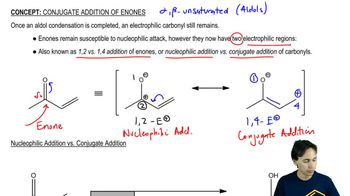
1,2 vs 1,4 Addition

Markovnikov's Rule

Markovnikov's Rule states that in the addition of HX (where X is a halogen) to an alkene, the hydrogen atom will attach to the carbon with the greater number of hydrogen atoms already attached. This rule helps predict the major product of the reaction when alkenes react with HCl, guiding the placement of the halide in the final product.
추천 영상:
03:54
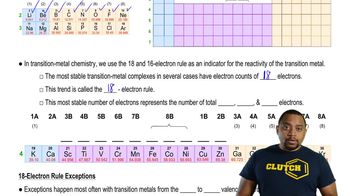
The 18 and 16 Electron Rule

Carbocation Stability

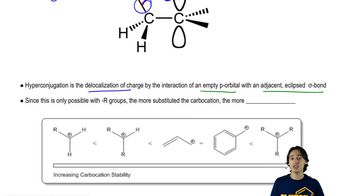
Carbocation stability is a key concept in organic chemistry that refers to the relative stability of positively charged carbon species. The stability of a carbocation is influenced by factors such as the degree of substitution (primary, secondary, tertiary) and resonance. Understanding carbocation stability is essential for predicting the outcome of reactions involving alkenes and HCl, as more stable carbocations are favored in the reaction pathway.
추천 영상:
05:58
Determining Carbocation Stability