


Ch.11 - Reactions of Alcohols
Wade - Organic Chemistry 9th Edition
Wade9th EditionOrganic ChemistryISBN: 9780135213728당신이 사용하는 게 아니라요?교과서 변경
11장, 문제 59

Two unknowns, X and Y, both having the molecular formula C4H8O, give the following results with four chemical tests. Propose structures for X and Y consistent with this information.

검증된 단계별 안내
1
Step 1: Analyze the molecular formula C4H8O. This formula suggests the presence of one oxygen atom and a degree of unsaturation (double bond or ring structure).
Step 2: Examine the test results for Compound X. The decolorization of bromine indicates the presence of a double bond (alkene). The reaction with sodium metal producing bubbles suggests the presence of an alcohol group (-OH). The chromic acid test turning orange to green confirms the presence of a primary or secondary alcohol, as chromic acid oxidizes these types of alcohols. No reaction with Lucas reagent suggests it is not a tertiary alcohol.
Step 3: Propose a structure for Compound X based on the tests. A plausible structure is an unsaturated alcohol, such as 3-buten-1-ol, which has both a double bond and a primary alcohol group.
Step 4: Examine the test results for Compound Y. No reaction with bromine indicates the absence of a double bond. No reaction with sodium metal suggests the absence of an alcohol group. No reaction with chromic acid and Lucas reagent further confirms the absence of alcohol functionality and suggests a ketone or ether.
Step 5: Propose a structure for Compound Y based on the tests. A plausible structure is a ketone, such as butanone, which does not react with the given reagents under the test conditions.

비슷한 문제에 대한 검증된 영상 답변:

이 영상 해법은 위 문제에 도움이 된다고 튜터들이 추천한 것입니다.
영상 길이:
11m

주요 개념

질문에 올바르게 답하기 위해 반드시 이해해야 하는 핵심 개념들은 다음과 같습니다.

Functional Groups

Functional groups are specific groups of atoms within molecules that are responsible for the characteristic chemical reactions of those molecules. In organic chemistry, identifying the functional groups present in compounds X and Y is crucial for predicting their reactivity and behavior in chemical tests, such as those involving bromine or chromic acid.
추천 영상:
02:36
Identifying Functional Groups

Reactivity with Bromine

The reaction of organic compounds with bromine is often used to identify the presence of unsaturation, such as double or triple bonds. In this case, compound X decolorizes bromine, indicating it likely contains a double bond, while compound Y does not react, suggesting it may be saturated or lack reactive sites.
추천 영상:
00:54
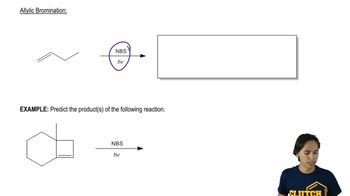
Mechanism of Allylic Bromination.

Oxidation and Reduction Tests

Oxidation and reduction tests, such as those using chromic acid, help determine the presence of alcohols, aldehydes, or ketones. The change from orange to green in the chromic acid test for compound X suggests it is likely an alcohol or aldehyde that can be oxidized, while the lack of reaction for compound Y indicates it may not be easily oxidizable.
추천 영상:
00:54
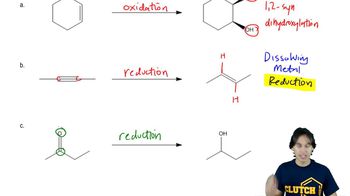
Distinguishing between Oxidation and Reduction
관련 실천
교과서 질문

The Williamson ether synthesis involves the displacement of an alkyl halide or tosylate by an alkoxide ion. Would the synthesis shown be possible by making a tosylate and displacing it? If so, show the sequence of reactions. If not, explain why not and show an alternative synthesis that would be more likely to work.

973
views
교과서 질문

Chromic acid oxidation of an alcohol (Section 11-2A) occurs in two steps: formation of the chromate ester, followed by an elimination of H+ and chromium. Which step do you expect to be rate-limiting? Careful kinetic studies have shown that Compound A undergoes chromic acid oxidation over 10 times as fast as Compound B. Explain this large difference in rates.

1113
views
교과서 질문

Show how you would synthesize the following compounds. As starting materials, you may use any alcohols containing four or fewer carbon atoms, cyclohexanol, and any necessary solvents and inorganic reagents.

(h)

897
views
교과서 질문

(a) The reaction of butan-2-ol with concentrated aqueous HBr goes with partial racemization, giving more inversion than retention of configuration. Propose a mechanism that accounts for racemization with excess inversion.

1466
views
교과서 질문

Show how you would synthesize the following compound. As starting materials, you may use any alcohols containing five or fewer carbon atoms and any necessary solvents and inorganic reagents.

964
views
교과서 질문

The following pseudo-syntheses (guaranteed not to work) exemplify a common conceptual error.

(a) What is the conceptual error implicit in these syntheses?

(b) Propose syntheses that are more likely to succeed.

766
views