Which of the following is not a function of the skeletal system? a. Primary storage site in the body for sodium and potassium salts b. Location of the red bone marrow, which produces red blood cells c. Storage of triglycerides in yellow bone marrow d. Support and protection of the body and vital organs
Verified step by step guidance
1
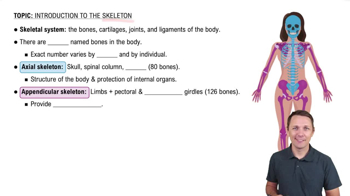
Step 1: Begin by reviewing the primary functions of the skeletal system. These include support and protection of the body and vital organs, facilitation of movement, storage of minerals (such as calcium and phosphorus), production of blood cells in red bone marrow, and storage of triglycerides in yellow bone marrow.
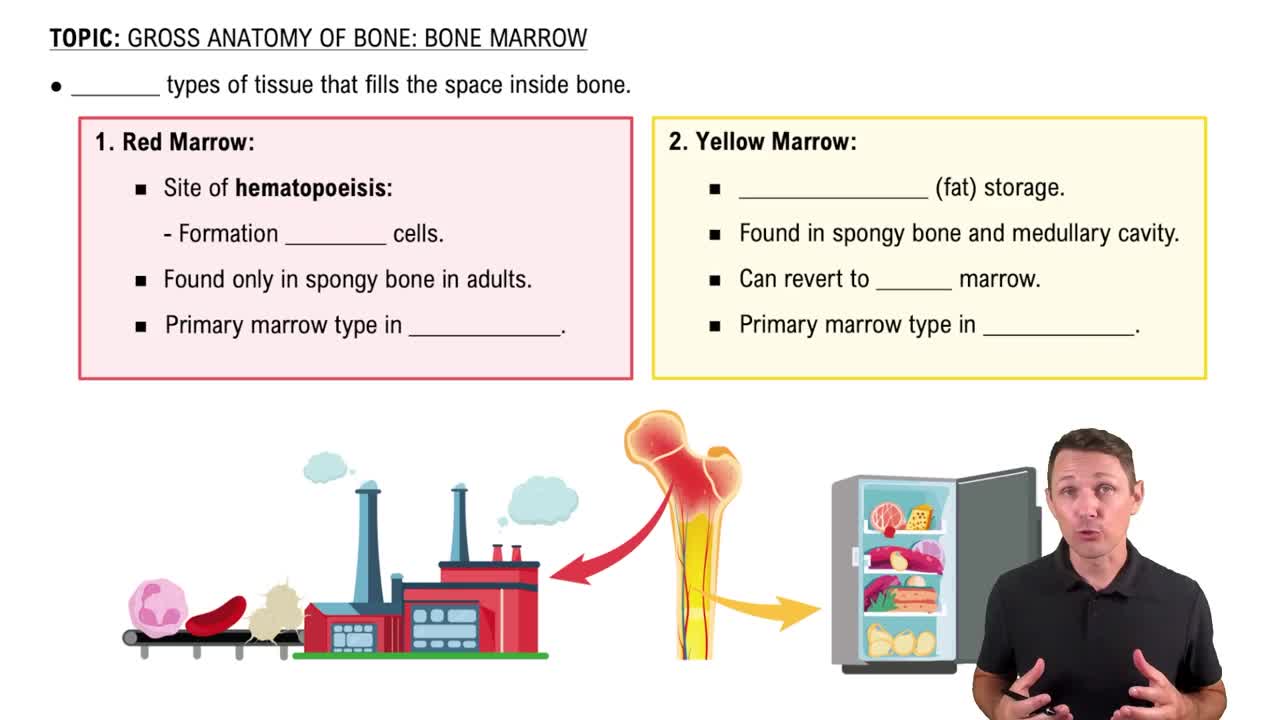
Step 2: Analyze each option provided in the question. For example, option b mentions the production of red blood cells in red bone marrow, which is a known function of the skeletal system.
Step 3: Evaluate option c, which refers to the storage of triglycerides in yellow bone marrow. This is also a recognized function of the skeletal system.
Step 4: Consider option d, which states support and protection of the body and vital organs. This is a fundamental function of the skeletal system.
Step 5: Examine option a, which mentions the storage of sodium and potassium salts. This is not a primary function of the skeletal system, as the skeletal system primarily stores calcium and phosphorus salts. Therefore, option a is the correct answer.
Verified video answer for a similar problem:
This video solution was recommended by our tutors as helpful for the problem above
Play a video:
Was this helpful?
Key Concepts
Here are the essential concepts you must grasp in order to answer the question correctly.
Functions of the Skeletal System
The skeletal system serves several critical functions, including providing structural support to the body, protecting vital organs, facilitating movement through attachment points for muscles, and serving as a reservoir for minerals such as calcium and phosphorus. Additionally, it plays a role in hematopoiesis, the production of blood cells, within the bone marrow.
Bone marrow is classified into two types: red bone marrow and yellow bone marrow. Red bone marrow is primarily responsible for the production of red blood cells, white blood cells, and platelets, while yellow bone marrow serves as a storage site for fats (triglycerides) and can convert to red marrow in response to increased demand for blood cell production.
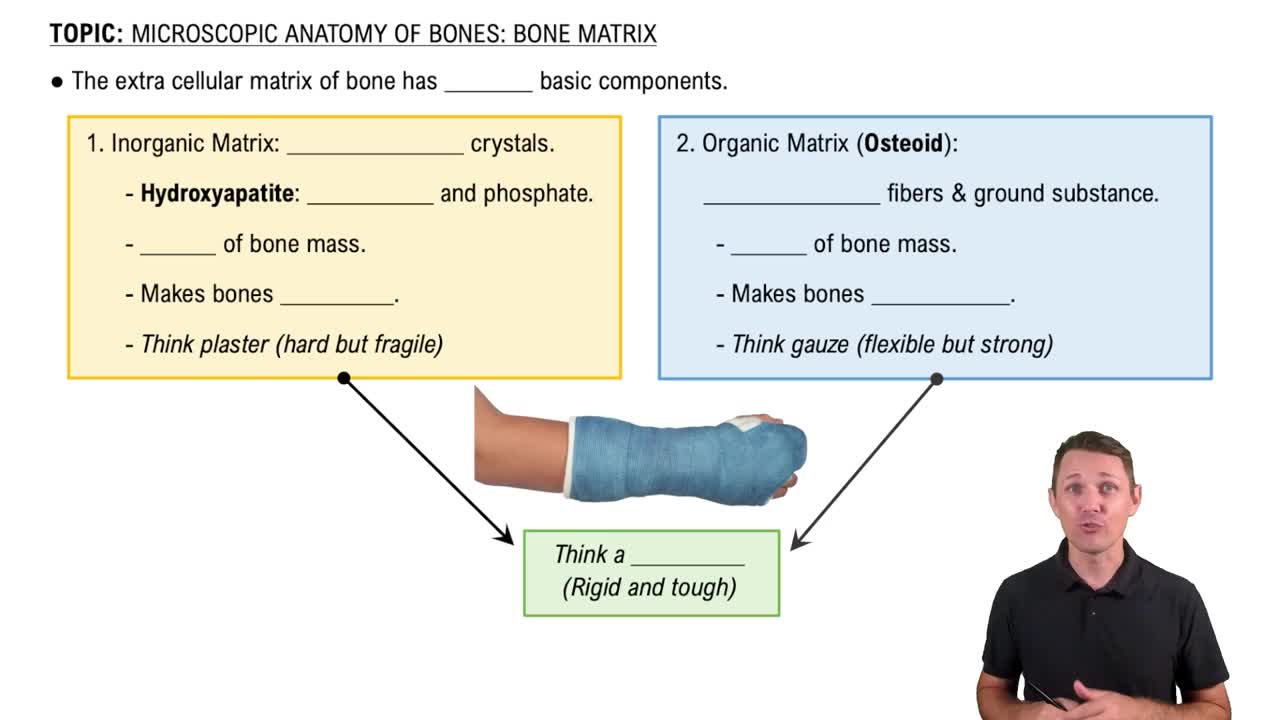
Bones act as a major storage site for essential minerals, particularly calcium and phosphorus, which are vital for various bodily functions, including nerve transmission and muscle contraction. The skeletal system also stores sodium and potassium salts, although their primary storage occurs in other tissues, making this function less emphasized in the context of the skeletal system.