How does the heart's ability to contract differ from that of other muscles of the body?
Ch. 11 Cardiovascular System

Marieb13th EditionEssentials of Human Anatomy & PhysiologyISBN: 9780135624340Not the one you use?Change textbook
Chapter 11, Problem 24
Name three factors that are important in promoting venous return.
Verified step by step guidance1
Understand that venous return refers to the flow of blood back to the heart, specifically into the right atrium, from the systemic circulation.
Factor 1: Explain the role of the skeletal muscle pump. When skeletal muscles contract, they compress nearby veins, pushing blood toward the heart. Valves in the veins prevent backflow, ensuring unidirectional movement.
Factor 2: Discuss the respiratory pump. During inhalation, the diaphragm moves downward, decreasing thoracic pressure and increasing abdominal pressure. This pressure gradient helps propel blood from the abdominal veins into the thoracic veins and toward the heart.
Factor 3: Highlight the importance of venous tone. Smooth muscle in the walls of veins can contract, reducing the diameter of the veins and increasing the pressure within them, which aids in moving blood back to the heart.
Summarize how these factors work together to overcome the low pressure in veins and ensure efficient venous return to the heart.

Verified video answer for a similar problem:
This video solution was recommended by our tutors as helpful for the problem above.
Video duration:
2mWas this helpful?
Key Concepts
Here are the essential concepts you must grasp in order to answer the question correctly.
Venous Return
Venous return refers to the flow of blood back to the heart through the veins. It is crucial for maintaining adequate cardiac output and ensuring that the heart can effectively pump blood to the rest of the body. Factors influencing venous return include blood volume, venous pressure, and the efficiency of the venous system.
Recommended video:
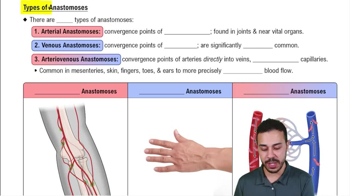
Types of Anastomoses
Muscle Pump Mechanism
The muscle pump mechanism is a physiological process where skeletal muscles contract and compress the veins, helping to push blood back toward the heart. This is particularly important in the limbs, where gravity can hinder venous return. Regular physical activity enhances this mechanism, promoting better circulation.
Recommended video:
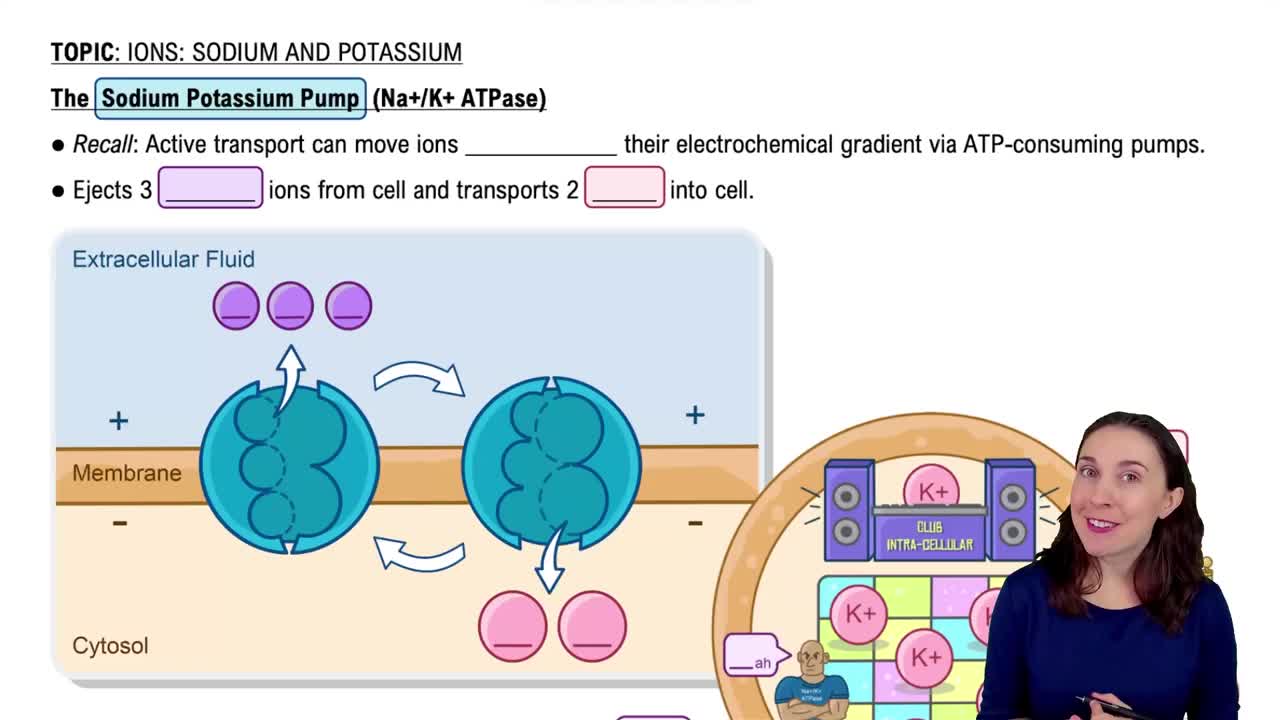
The Sodium Potassium Pump
Respiratory Pump
The respiratory pump is a mechanism that aids venous return during breathing. When we inhale, the pressure in the thoracic cavity decreases, allowing blood to flow more easily from the veins into the heart. This process is enhanced by deep breathing and is vital for maintaining efficient blood circulation, especially during physical exertion.
Recommended video:
The Sodium Potassium Pump
Related Practice
Textbook Question
1073
views
Textbook Question
Capillary permeability increase and plasma proteins leak into the interstitial fluid as part of the inflammatory process. Why is this desirable?
1645
views
Textbook Question
What is the function of the hepatic portal circulation? In what way is a portal circulation a 'strange' circulation?
1513
views
Textbook Question
Name three different factors that increase heart rate.
842
views
2
rank
Textbook Question
Two elements determine blood pressure—the cardiac output of the heart and the peripheral resistance, or friction, in the blood vessels. Name two factors that increase cardiac output. Name two factors that increase peripheral resistance.
1229
views
Textbook Question
Trace one drop of blood from the time it enters the right atrium of the heart until it enters the left atrium. What is this circuit called?
1597
views