

Pearson+ LogoPearson+ Logo
Ch. 15 Tracing Evolutionary History
Taylor - Campbell Biology: Concepts & Connections 10th Edition
Taylor, Simon, Dickey, Hogan10th EditionCampbell Biology: Concepts & ConnectionsISBN: 9780136538783Not the one you use?Change textbook
Chapter 15, Problem 12

Which are more likely to be closely related: two species with similar appearance but divergent gene sequences or two species with different appearances but nearly identical genes? Explain.

Verified step by step guidance
1
Identify the key factors that determine the relatedness of species, which include both physical characteristics (phenotype) and genetic makeup (genotype).
Understand that while similar appearance (phenotype) can suggest relatedness, it can also be misleading due to convergent evolution, where unrelated species independently evolve similar traits as a result of having to adapt to similar environments or ecological niches.
Recognize that genetic similarity (genotype) provides a more reliable measure of relatedness. Species with nearly identical genes are more likely to have diverged more recently in evolutionary terms, sharing a common ancestor.
Consider the role of genetic drift and natural selection in shaping the genes of species. Even though two species might look different due to adaptations to different environments or niches, their genetic makeup might still reveal a close evolutionary relationship.
Conclude that two species with different appearances but nearly identical genes are more likely to be closely related than those with similar appearances but divergent gene sequences. This is because genetic information is a more fundamental aspect of heredity and evolutionary history than physical appearance.

Verified video answer for a similar problem:

This video solution was recommended by our tutors as helpful for the problem above.
Video duration:
1m
Was this helpful?

Key Concepts

Here are the essential concepts you must grasp in order to answer the question correctly.

Convergent Evolution

Convergent evolution occurs when unrelated species develop similar traits or appearances due to adapting to similar environments or ecological niches. This phenomenon can lead to species that look alike despite having different evolutionary backgrounds, which can create confusion when assessing their relatedness based solely on morphology.
Recommended video:
Guided course
05:22
Convergent and Divergent Evolution

Molecular Phylogenetics

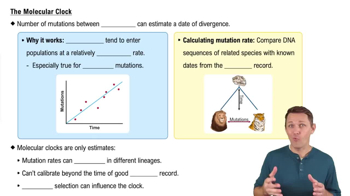
Molecular phylogenetics is the study of evolutionary relationships among species using molecular data, particularly DNA and protein sequences. By comparing genetic material, scientists can construct phylogenetic trees that reveal how closely related different species are, often providing clearer insights than morphological comparisons alone.
Recommended video:
05:13
The Molecular Clock

Morphological vs. Genetic Similarity

Morphological similarity refers to the physical characteristics of organisms, while genetic similarity pertains to the DNA sequences shared between species. While two species may appear similar due to convergent evolution, their genetic divergence can indicate a lack of close evolutionary relationship, highlighting the importance of genetic data in understanding species relatedness.
Recommended video: