
Pearson+ LogoPearson+ Logo
Ch. 1 Biology: The Study of Scientific Life
Taylor - Campbell Biology: Concepts & Connections 10th Edition
Taylor, Simon, Dickey, Hogan10th EditionCampbell Biology: Concepts & ConnectionsISBN: 9780136538783Not the one you use?Change textbook
Chapter 1, Problem 10

In an ecosystem, how is the flow of energy similar to that of matter, and how is it different?

Verified step by step guidance
1
Understand the concept of energy flow in an ecosystem: Energy flows in one direction, starting from the sun (or another energy source), moving to producers (like plants) through photosynthesis, and then to consumers and decomposers. Energy is not recycled; it is lost as heat at each trophic level due to the second law of thermodynamics.
Understand the concept of matter cycling in an ecosystem: Matter, unlike energy, is recycled within the ecosystem. Elements like carbon, nitrogen, and phosphorus move through biogeochemical cycles, transitioning between living organisms and the environment (e.g., soil, water, and atmosphere).
Compare the flow of energy and matter: Energy flows in a linear path and is not reused, while matter cycles through the ecosystem repeatedly. For example, carbon atoms in a plant may be consumed by an animal, released as CO₂ during respiration, and then reused by another plant during photosynthesis.
Identify the role of decomposers in both processes: Decomposers (like fungi and bacteria) break down dead organisms, releasing nutrients back into the soil for plants to use (matter recycling). However, the energy stored in the dead organisms is released as heat and cannot be reused.
Summarize the key difference: Energy flow is unidirectional and eventually dissipates as heat, while matter is conserved and continuously cycled through the ecosystem in various forms.

Verified video answer for a similar problem:

This video solution was recommended by our tutors as helpful for the problem above.
Video duration:
2m
Was this helpful?

Key Concepts

Here are the essential concepts you must grasp in order to answer the question correctly.

Energy Flow in Ecosystems

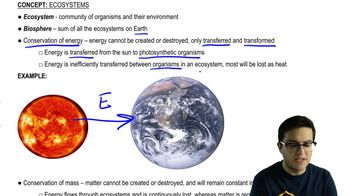
Energy flow in ecosystems refers to the transfer of energy through food chains and food webs, starting from primary producers like plants, which convert solar energy into chemical energy via photosynthesis. This energy is then passed on to consumers (herbivores and carnivores) and eventually to decomposers. Unlike matter, energy flows in a one-way direction and is eventually lost as heat, making it non-cyclical.
Recommended video:
Guided course
03:52
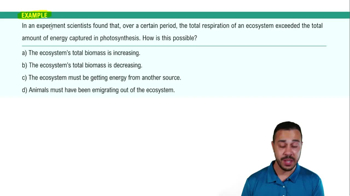
Energy Flow Through Ecosystems Example 1

Matter Cycling in Ecosystems

Matter cycling involves the continuous movement of nutrients and elements through biotic and abiotic components of an ecosystem. Unlike energy, matter is recycled through processes such as decomposition, where organic matter is broken down and returned to the soil, allowing it to be reused by plants. This cyclical nature of matter ensures that essential nutrients are available for various life forms.
Recommended video:
Guided course
02:19
Ecosystems, Energy, and Matter

Differences Between Energy and Matter in Ecosystems

The primary difference between energy and matter in ecosystems lies in their flow and recycling. Energy flows in a linear path and is dissipated as heat, while matter is recycled and reused within the ecosystem. This distinction highlights the importance of energy input from the sun and the necessity of nutrient recycling for sustaining life, emphasizing the interconnectedness of these processes in maintaining ecosystem health.
Recommended video:
Guided course
02:19
Ecosystems, Energy, and Matter