9–61. Trigonometric integrals Evaluate the following integrals. 37. ∫ [sec⁴(lnθ)]/θ dθ
Verified step by step guidance
1
Step 1: Recognize that the integral involves a composite function, specifically sec⁴(lnθ). To simplify, consider a substitution to handle the logarithmic term. Let u = lnθ, which implies that du = (1/θ)dθ.
Step 2: Rewrite the integral in terms of u using the substitution. Since lnθ = u, θ = e^u. Replace dθ with θdu, which becomes e^u du. The integral now transforms to ∫ sec⁴(u) du.
Step 3: Recall the standard formula for integrating sec⁴(u). The integral of sec⁴(u) can be split into two parts using the identity sec⁴(u) = 1 + 2sec²(u). This simplifies the integral into ∫ 1 du + 2∫ sec²(u) du.
Step 4: Evaluate each term separately. The integral of 1 with respect to u is u, and the integral of sec²(u) with respect to u is tan(u). Combine these results to get u + 2tan(u).
Step 5: Substitute back u = lnθ into the result to express the solution in terms of θ. The final expression becomes lnθ + 2tan(lnθ) + C, where C is the constant of integration.
Verified video answer for a similar problem:
This video solution was recommended by our tutors as helpful for the problem above
Video duration:
2m
Play a video:
0 Comments
Key Concepts
Here are the essential concepts you must grasp in order to answer the question correctly.
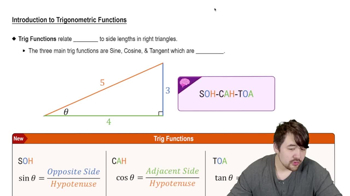
Trigonometric Functions
Trigonometric functions, such as secant (sec), are fundamental in calculus, particularly in integration and differentiation. The secant function is defined as the reciprocal of the cosine function, sec(x) = 1/cos(x). Understanding how to manipulate and integrate these functions is crucial for solving integrals involving trigonometric expressions.
Integration techniques, including substitution and integration by parts, are essential for evaluating complex integrals. In this case, recognizing the structure of the integral and applying appropriate methods can simplify the process. Mastery of these techniques allows for the effective handling of integrals that involve products of functions or composite functions.
The natural logarithm function, ln(θ), plays a significant role in calculus, particularly in integration. Its derivative, 1/θ, is important when integrating functions that include ln(θ). Understanding the properties of logarithmic functions and their derivatives can aid in simplifying integrals and recognizing patterns that facilitate evaluation.