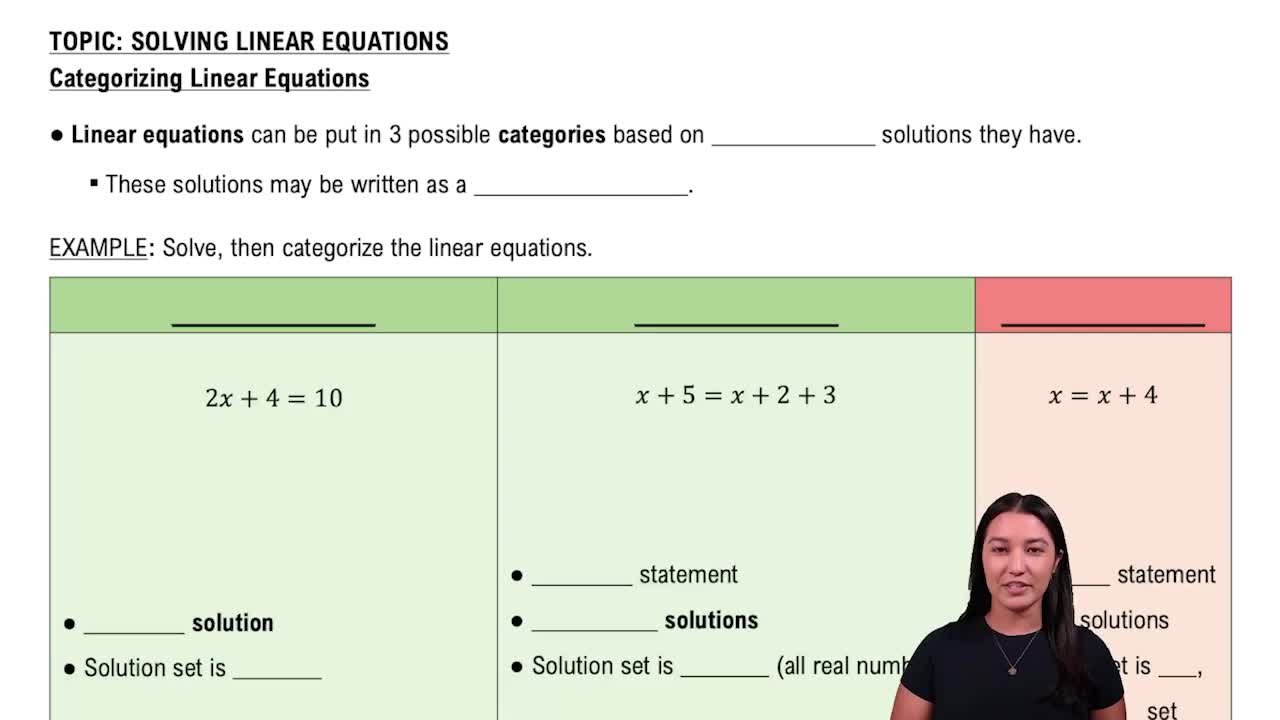
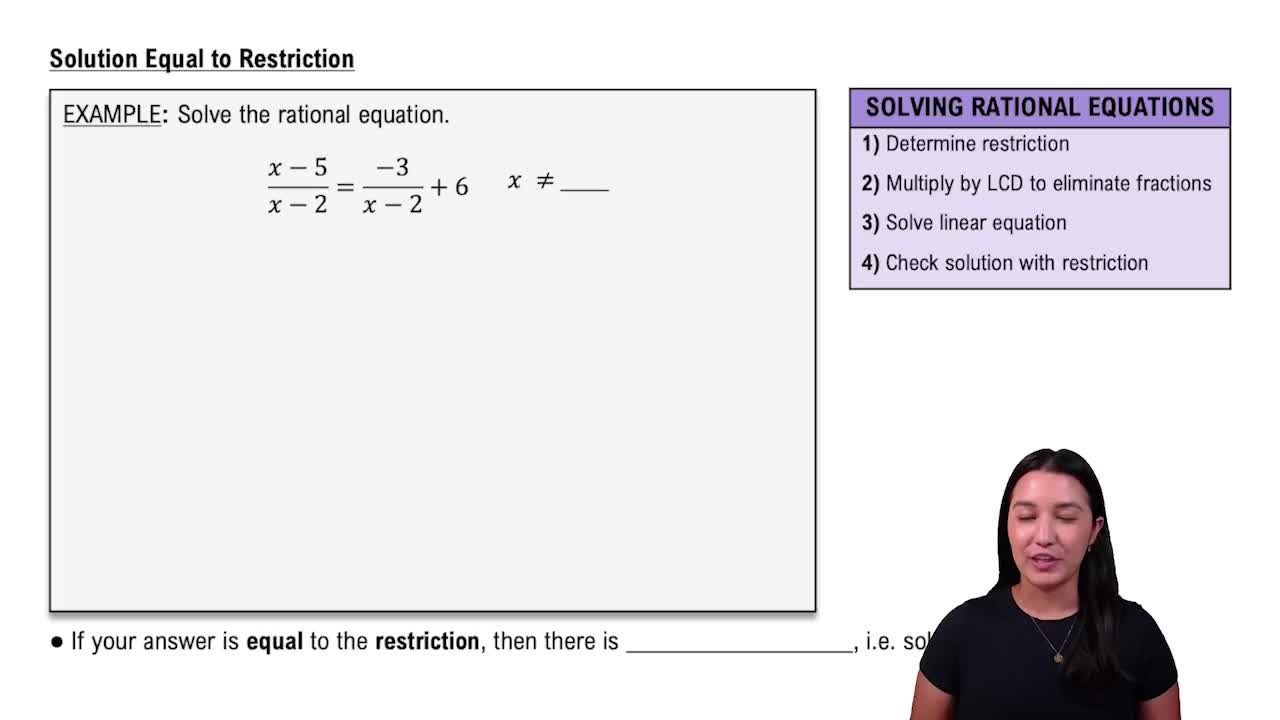
Determine the values of the variable that cannot possibly be solutions of each equation. Do not solve. 1/(4x) - 2/x = 3

Solve each equation. | 5/ (x-3) | = 10
Verified step by step guidance
Verified video answer for a similar problem:
Key Concepts
Absolute Value Equations
Isolating the Variable
Checking for Extraneous Solutions
Use the following facts. If x represents an integer, then x+1 represents the next consecutive integer. If x represents an even integer, then x+2 represents the next consecutive even integer. If x represents an odd integer, then x+2 represents the next consecutive odd integer. The sum of the squares of two consecutive odd integers is 202. Find the integers.
Solve each equation.
Solve each problem. See Example 1. The perimeter of a triangular plot of land is 2400 ft.The longest side is 200 ft less than twice the shortest. The middle side is 200 ft less than the longest side. Find the lengths of the three sides of the triangular plot.
Solve each equation using the zero-factor property. x2 + 2x - 8 = 0
Solve each problem. (Modeling) Lead Intake As directed by the 'Safe Drinking Water Act' of December 1974, the EPA proposed a maximum lead level in public drinking water of 0.05 mg per liter. This standard assumed an individual consumption of two liters of water per day. If EPA guidelines are followed, write an equation that models the maximum amount of lead A ingested in x years. Assume that there are 365.25 days in a year.
