Pearson+ LogoPearson+ Logo
Ch. 1 - The Molecular Basis of Heredity, Variation, and Evolution
Sanders - Genetic Analysis: An Integrated Approach 3rd Edition
Sanders3rd EditionGenetic Analysis: An Integrated ApproachISBN: 9780135564172Not the one you use?Change textbook
Chapter 1, Problem 2

How do you think the determination that DNA is the hereditary material affected the direction of biological research?

Verified step by step guidance
1
Understand the historical context: Before the discovery that DNA is the hereditary material, proteins were considered the likely candidates for carrying genetic information due to their complexity and diversity.
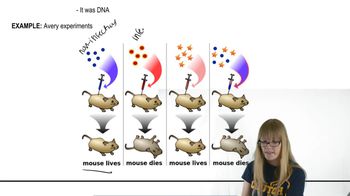
Review the key experiments: Familiarize yourself with the pivotal experiments, such as Griffith's transformation experiment, Avery-MacLeod-McCarty experiment, and the Hershey-Chase experiment, which collectively demonstrated that DNA is the genetic material.
Consider the impact on molecular biology: Recognize that the identification of DNA as the hereditary material led to the development of molecular biology as a field, focusing on understanding the structure and function of DNA.
Explore the advancements in genetic research: Acknowledge that this discovery paved the way for the elucidation of the DNA double helix structure by Watson and Crick, which further revolutionized genetic research and biotechnology.
Reflect on modern implications: Consider how this foundational knowledge has influenced contemporary research areas such as genomics, genetic engineering, and personalized medicine, transforming our approach to studying and manipulating genetic information.

Verified video answer for a similar problem:

This video solution was recommended by our tutors as helpful for the problem above.
Video duration:
3m
Was this helpful?

Key Concepts

Here are the essential concepts you must grasp in order to answer the question correctly.

DNA as Hereditary Material

The determination that DNA is the hereditary material established that genetic information is stored and transmitted through DNA molecules. This discovery, primarily attributed to the work of Avery, MacLeod, and McCarty in the 1940s, shifted the focus of genetics from proteins to nucleic acids, leading to a deeper understanding of inheritance and genetic variation.
Recommended video:
Guided course
09:32
History and Experiments

Molecular Biology

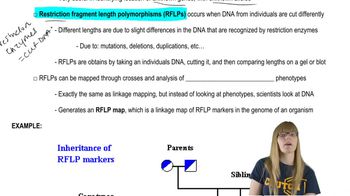
The identification of DNA as the hereditary material paved the way for the field of molecular biology, which studies the molecular mechanisms of biological processes. This discipline integrates genetics, biochemistry, and cell biology, allowing researchers to explore how genes are expressed and regulated, and how they influence cellular functions and organismal traits.
Recommended video:
Guided course
07:11
Mapping with Markers

Biotechnology and Genetic Engineering

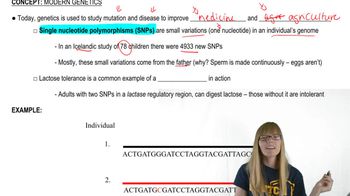
Recognizing DNA as the carrier of genetic information has been fundamental to the development of biotechnology and genetic engineering. This understanding has enabled scientists to manipulate DNA for various applications, including gene cloning, CRISPR technology, and the production of genetically modified organisms (GMOs), revolutionizing medicine, agriculture, and environmental science.
Recommended video:
Guided course
09:03
Modern Genetics