Pearson+ LogoPearson+ Logo
Ch. 1 - The Molecular Basis of Heredity, Variation, and Evolution
Sanders - Genetic Analysis: An Integrated Approach 3rd Edition
Sanders3rd EditionGenetic Analysis: An Integrated ApproachISBN: 9780135564172Not the one you use?Change textbook
Chapter 1, Problem 3

A commentator once described genetics as 'the queen of the biological sciences.' The statement was meant to imply that genetics is of overarching importance in the biological sciences. Do you agree with this statement? In what ways do you think the statement is accurate?

Verified step by step guidance
1
Understand the context of the statement: The commentator is emphasizing the central role of genetics in understanding biological processes. Begin by considering how genetics serves as a foundation for various biological disciplines.
Explore the role of genetics in heredity: Genetics explains how traits are passed from one generation to the next through the study of DNA, genes, and chromosomes. This foundational knowledge is critical for understanding inheritance patterns.
Discuss the importance of genetics in molecular biology: Genetics provides insights into the structure and function of DNA, RNA, and proteins, which are essential for understanding cellular processes and molecular mechanisms.
Examine the role of genetics in evolution and biodiversity: Genetics helps explain how genetic variation leads to evolution and the diversity of life forms, making it a cornerstone of evolutionary biology.
Highlight the practical applications of genetics: Genetics has significant implications in fields like medicine (e.g., genetic disorders, gene therapy), agriculture (e.g., genetically modified organisms), and biotechnology, showcasing its overarching importance in the biological sciences.

Verified video answer for a similar problem:

This video solution was recommended by our tutors as helpful for the problem above.
Video duration:
1m
Was this helpful?

Key Concepts

Here are the essential concepts you must grasp in order to answer the question correctly.

Fundamentals of Genetics

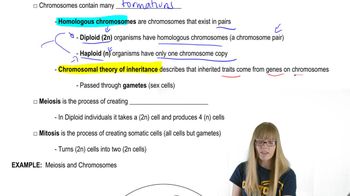
Genetics is the study of heredity and variation in organisms, focusing on how traits are passed from one generation to the next through genes. Understanding the structure and function of DNA, the role of alleles, and the principles of inheritance is essential for grasping how genetic information influences biological processes.
Recommended video:
Guided course
03:25
Chromosomal Fundamentals

Molecular Biology

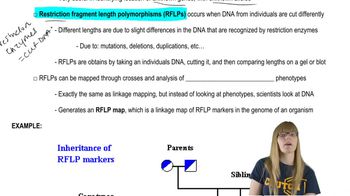
Molecular biology examines the molecular mechanisms that underlie genetic processes, including DNA replication, transcription, and translation. This field connects genetics with biochemistry and cell biology, highlighting how genetic information is expressed and regulated at the molecular level, which is crucial for understanding the complexity of life.
Recommended video:
Guided course
07:11
Mapping with Markers

Evolutionary Biology

Genetics plays a pivotal role in evolutionary biology by providing the mechanisms for variation and natural selection. The study of population genetics helps explain how genetic diversity contributes to the adaptation and evolution of species, reinforcing the idea that genetics is foundational to understanding biological diversity and the history of life on Earth.
Recommended video: