Pearson+ LogoPearson+ Logo
Ch. 13 - Regulation of Gene Expression in Eukaryotes
Sanders - Genetic Analysis: An Integrated Approach 3rd Edition
Sanders3rd EditionGenetic Analysis: An Integrated ApproachISBN: 9780135564172Not the one you use?Change textbook
Chapter 13, Problem 1c

Devoting a few sentences to each, describe the following structures or complexes and their effects on eukaryotic gene expression:
Silencer

Verified step by step guidance
1
Understand that a silencer is a DNA sequence that can bind regulatory proteins to suppress the transcription of a gene.
Recognize that silencers are typically located upstream, downstream, or within the gene they regulate, and their position can vary.
Explain that silencers function by recruiting repressor proteins or other regulatory factors that inhibit the assembly of the transcriptional machinery at the promoter.
Note that silencers can also modify chromatin structure, making the DNA less accessible to transcription factors and RNA polymerase II.
Conclude that the overall effect of a silencer is to decrease or completely shut down the expression of the associated gene, contributing to the regulation of gene expression in eukaryotic cells.

Verified video answer for a similar problem:

This video solution was recommended by our tutors as helpful for the problem above.
Video duration:
1m
Was this helpful?

Key Concepts

Here are the essential concepts you must grasp in order to answer the question correctly.

Silencer Elements

Silencer elements are regulatory DNA sequences that can inhibit the transcription of nearby genes. They are typically located upstream or downstream of the gene they regulate and function by binding repressor proteins. This binding can prevent the assembly of the transcription machinery, thereby reducing gene expression. Silencers play a crucial role in fine-tuning gene expression in response to various cellular signals.
Recommended video:
Guided course
03:08
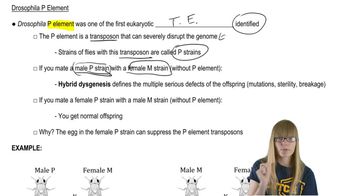
Drosophila P Element

Transcription Factors

Transcription factors are proteins that bind to specific DNA sequences to regulate the transcription of genes. They can act as activators or repressors, influencing the recruitment of RNA polymerase to the promoter region of a gene. The interaction between transcription factors and silencer elements is essential for controlling gene expression, as repressors can inhibit the action of activators, leading to decreased transcription levels.
Recommended video:
Guided course
09:16
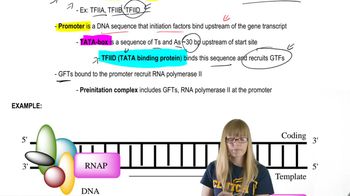
Eukaryotic Transcription

Eukaryotic Gene Expression Regulation

Eukaryotic gene expression regulation involves multiple layers of control, including chromatin remodeling, transcriptional regulation, and post-transcriptional modifications. Silencers are one component of this complex regulatory network, which ensures that genes are expressed at the right time and in the right amounts. This regulation is vital for processes such as development, differentiation, and response to environmental changes, allowing cells to adapt to various conditions.
Recommended video:
Guided course
09:22
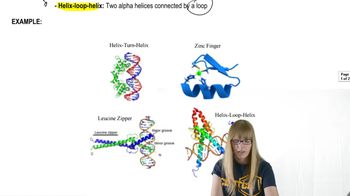
Review of Regulation