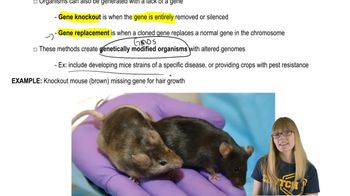
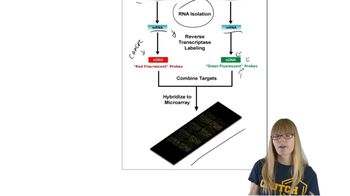
The RAS gene encodes a signaling protein that hydrolyzes GTP to GDP. When bound by GDP, the RAS protein is inactive, whereas when bound by GTP, RAS protein activates a target protein, resulting in stimulation of cells to actively grow and divide. As shown in the accompanying sequence, a single base-pair mutation results in a mutant protein that is constitutively active, leading to continual promotion of cell proliferation. Such mutations play a role in the formation of cancer. You have cloned the wild-type version of the mouse RAS gene and wish to create a mutant form to study its biological activity in vitro and in transgenic mice. Outline how you would proceed.

About 1% of occurrences of nonautoimmune type 1 diabetes are due to loss-of-function alleles in the insulin gene. Individuals heterozygous for such mutations develop diabetes as infants or in the first few years of their lives. Outline how you might approach gene therapy for such a disease and what difficulties you might encounter.
Verified step by step guidance
Verified video answer for a similar problem:
Key Concepts
Gene Therapy
Loss-of-Function Alleles
Challenges in Gene Therapy
You have cloned a gene for an enzyme that degrades lipids in a bacterium that normally lives in cold temperatures. You wish to transfer this gene into E. coli to produce industrial amounts of enzyme for use in laundry detergent.
How would you accomplish this?
You have cloned a gene for an enzyme that degrades lipids in a bacterium that normally lives in cold temperatures. You wish to transfer this gene into E. coli to produce industrial amounts of enzyme for use in laundry detergent.
You have managed to produce transgenic E. coli expressing mRNA of your gene, but only a low level of protein is produced. Why might this be so? How could you overcome this problem?
Describe how having the Cas9 gene at a genomic locus unlinked to the guide RNA and target site locus in an engineered gene drive system could slow the propagation of the gene drive allele in a population into which a small number of individuals carrying both the gene drive allele and the Cas9 locus are released.
Would a gene drive system spread rapidly through a population in a species that tends to self-mate (e.g., Arabidopsis, C. elegans)? In a species in which the breeding cycle is slow (e.g., humans)?