Pearson+ LogoPearson+ Logo
Ch.21 The Generation of Biochemical Energy
McMurry - Fundamentals of GOB 8th Edition
McMurry8th EditionFundamentals of GOBISBN: 9780134015187Not the one you use?Change textbook
Chapter 21, Problem 4

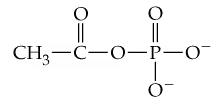
Acetyl phosphate, whose structure is given here, is another compound with a relatively high free energy of hydrolysis.
Structural formula of acetyl phosphate, showing its high free energy of hydrolysis with carbon, oxygen, and phosphorus atoms.
Using structural formulas, write the equation for the hydrolysis of this phosphate.

Verified step by step guidance
1
Identify the structure of acetyl phosphate. Acetyl phosphate consists of an acetyl group (CH3CO-) attached to a phosphate group (-PO4). This compound undergoes hydrolysis, meaning it reacts with water (H2O).
Understand the concept of hydrolysis. In this reaction, the bond between the acetyl group and the phosphate group is broken, and water is used to split the molecule into two products.
Write the reactants for the hydrolysis reaction. The reactants are acetyl phosphate (CH3CO-PO4) and water (H2O).
Determine the products of the hydrolysis reaction. The acetyl group will form acetic acid (CH3COOH), and the phosphate group will form inorganic phosphate (HPO4^2− or H2PO4^−, depending on the pH).
Combine the reactants and products into a balanced chemical equation. The equation should show acetyl phosphate reacting with water to produce acetic acid and inorganic phosphate, ensuring the conservation of mass and charge.

Verified video answer for a similar problem:

This video solution was recommended by our tutors as helpful for the problem above.
Video duration:
2m
Was this helpful?

Key Concepts

Here are the essential concepts you must grasp in order to answer the question correctly.

Hydrolysis of Phosphates

Hydrolysis of phosphates involves the reaction of a phosphate compound with water, resulting in the breakdown of the compound and the release of energy. In biological systems, this process is crucial for energy transfer, as it often leads to the formation of inorganic phosphate and other products. Understanding the mechanism of hydrolysis helps in grasping how energy is utilized in cellular processes.
Recommended video:
Guided course
1:12
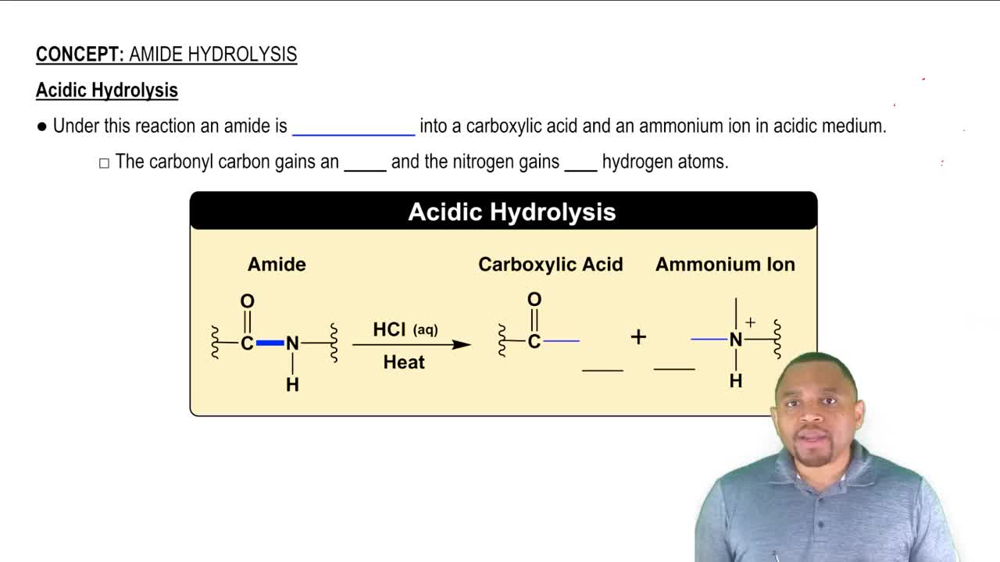
Acidic Hydrolysis Concept 1

Free Energy of Hydrolysis

The free energy of hydrolysis refers to the amount of energy released when a phosphate bond is broken during hydrolysis. Compounds like acetyl phosphate have a high free energy of hydrolysis, making them important energy donors in biochemical reactions. This concept is essential for understanding how energy is stored and released in metabolic pathways.
Recommended video:
Guided course
01:04
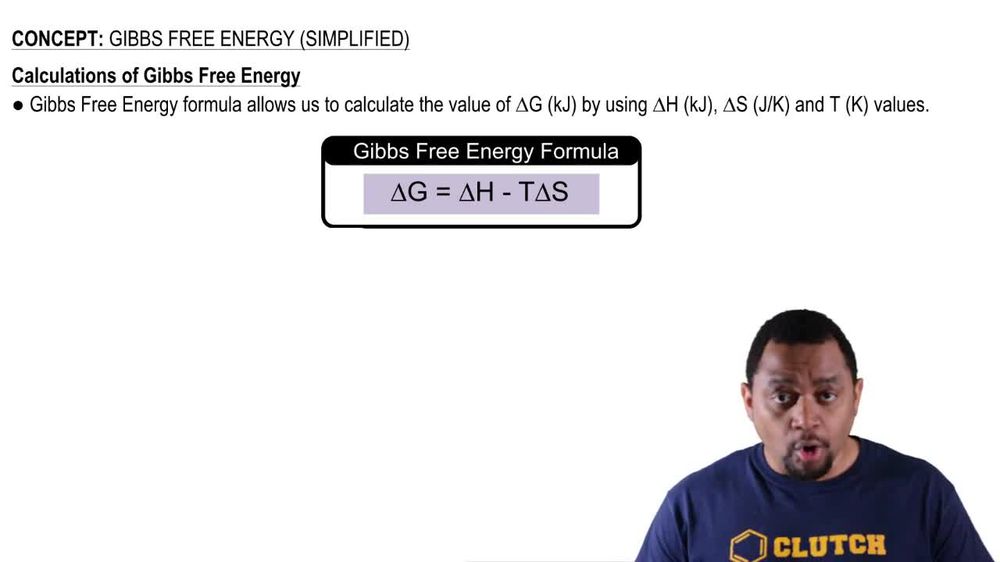
Gibbs Free Energy (Simplified) Concept 3

Structural Formulas

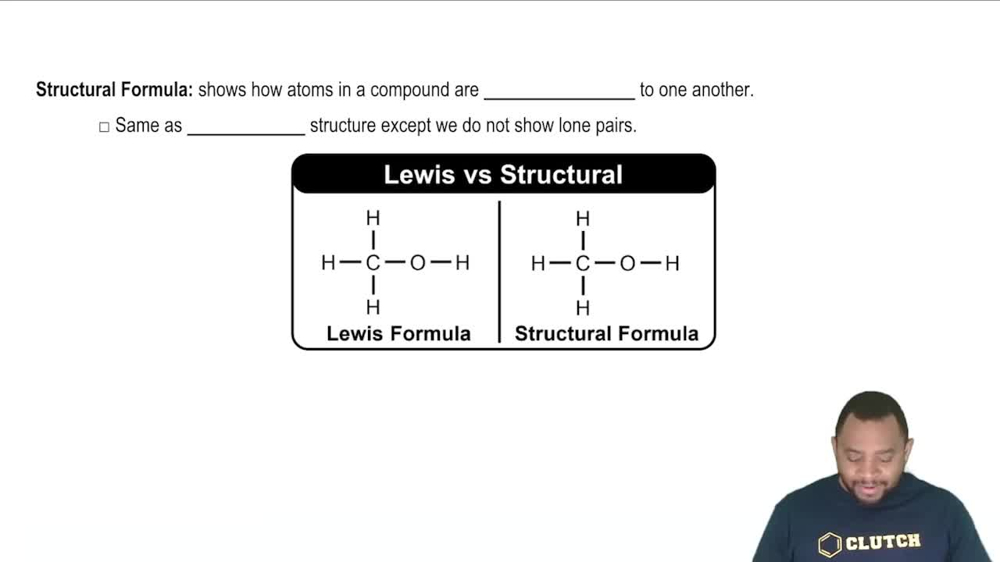
Structural formulas represent the arrangement of atoms within a molecule, illustrating how they are bonded together. In the context of hydrolysis, drawing the structural formula of acetyl phosphate allows for a clearer understanding of the reaction mechanism and the specific bonds that are broken during hydrolysis. This visual representation is crucial for predicting the products of the reaction.
Recommended video:
Guided course
1:01
Structural Formula Concept 2