Pearson+ LogoPearson+ Logo
Ch.19 Enzymes and Vitamins
McMurry - Fundamentals of GOB 8th Edition
McMurry8th EditionFundamentals of GOBISBN: 9780134015187Not the one you use?Change textbook
Chapter 19, Problem 25c

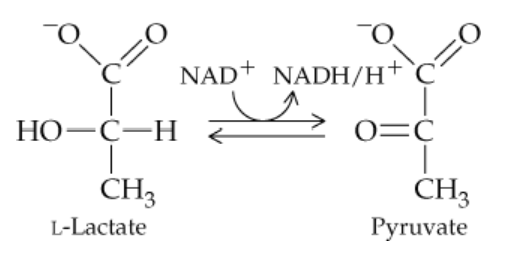
Answer questions (a)–(e) concerning the following reaction:
Chemical reaction diagram showing the conversion between L-Lactate and Pyruvate with NAD+ and NADH/H+ involved.
c. What is the substrate for the reaction as written?

Verified step by step guidance
1
Step 1: Understand the term 'substrate' in the context of a chemical reaction. The substrate is the reactant that is acted upon by a catalyst, enzyme, or reagent in the reaction.
Step 2: Examine the reaction provided in the problem. Identify the reactants and products. The substrate is typically the molecule that undergoes a chemical transformation during the reaction.
Step 3: Look for any specific indicators in the reaction, such as the presence of an enzyme or catalyst, which might help identify the substrate. The substrate is often the larger or more complex molecule being modified.
Step 4: Determine which reactant is being chemically altered in the reaction. This reactant is the substrate for the reaction as written.
Step 5: Confirm your identification of the substrate by ensuring it aligns with the reaction mechanism or description provided in the problem.

Verified video answer for a similar problem:

This video solution was recommended by our tutors as helpful for the problem above.
Video duration:
55s
Was this helpful?

Key Concepts

Here are the essential concepts you must grasp in order to answer the question correctly.

Substrate

In biochemical reactions, a substrate is the specific reactant that an enzyme acts upon. It binds to the enzyme's active site, where the reaction occurs, leading to the formation of products. Identifying the substrate is crucial for understanding the reaction mechanism and the role of the enzyme involved.
Recommended video:
Guided course
2:32
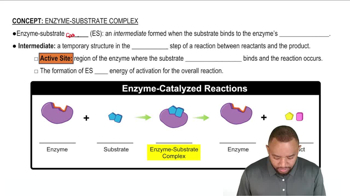
Enzyme-Substrate Complex Concept 1

Reaction Mechanism

A reaction mechanism describes the step-by-step process by which reactants are converted into products. It includes details about the formation and breaking of bonds, the transition states, and the intermediates involved. Understanding the mechanism helps in identifying the substrate and predicting the outcome of the reaction.
Recommended video:
Guided course
1:30
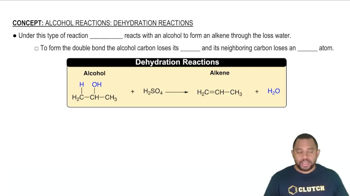
Alcohol Reactions: Dehydration Reactions Concept 1

Enzyme Specificity

Enzyme specificity refers to the ability of an enzyme to select and catalyze a particular substrate among many possible candidates. This specificity is determined by the enzyme's structure and the nature of the active site. Recognizing the substrate in a reaction requires knowledge of the enzyme's specificity and the context of the reaction.
Recommended video:
Guided course
01:37
Specific Gravity