Pearson+ LogoPearson+ Logo
Ch.22 Carbohydrate Metabolism
McMurry - Fundamentals of GOB 8th Edition
McMurry8th EditionFundamentals of GOBISBN: 9780134015187Not the one you use?Change textbook
Chapter 22, Problem 85

Is the same net production of ATP observed in the complete oxidation of fructose as is observed in the complete oxidation of glucose? Why or why not?

Verified step by step guidance
1
Understand the context: Both fructose and glucose are monosaccharides with the molecular formula C₆H₁₂O₆. They are metabolized through glycolysis, the citric acid cycle, and oxidative phosphorylation to produce ATP. The question asks whether the net ATP production differs between the two during complete oxidation.
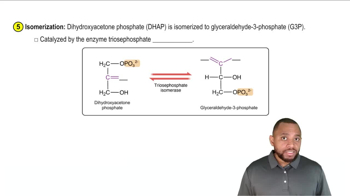
Step 1: Recall that glycolysis is the first stage of carbohydrate metabolism. Both glucose and fructose enter glycolysis, but fructose can enter at different points depending on the tissue. In the liver, fructose is converted to dihydroxyacetone phosphate (DHAP) and glyceraldehyde, which are intermediates in glycolysis. In other tissues, fructose is phosphorylated to fructose-6-phosphate, which directly enters glycolysis.
Step 2: Analyze the ATP yield from glycolysis. For both glucose and fructose, glycolysis produces 2 ATP molecules (net) and 2 NADH molecules per molecule of sugar. This step is identical for both sugars, assuming fructose enters glycolysis as an intermediate.
Step 3: Consider the citric acid cycle and oxidative phosphorylation. After glycolysis, the pyruvate produced is converted to acetyl-CoA, which enters the citric acid cycle. Each acetyl-CoA generates 3 NADH, 1 FADH₂, and 1 GTP (equivalent to ATP). These electron carriers (NADH and FADH₂) are then used in oxidative phosphorylation to produce ATP. Since both glucose and fructose are fully oxidized to CO₂, the ATP yield from these stages is the same for both sugars.
Step 4: Conclude that the net ATP production is the same for the complete oxidation of fructose and glucose. This is because both sugars are metabolized through the same pathways (glycolysis, citric acid cycle, and oxidative phosphorylation) and yield the same number of ATP molecules per molecule of sugar.

Verified video answer for a similar problem:

This video solution was recommended by our tutors as helpful for the problem above.
Video duration:
3m
Was this helpful?

Key Concepts

Here are the essential concepts you must grasp in order to answer the question correctly.

ATP Production

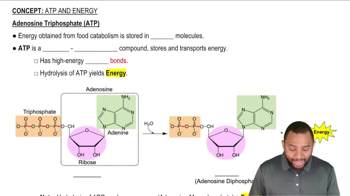
Adenosine triphosphate (ATP) is the primary energy carrier in cells. During cellular respiration, glucose and fructose undergo oxidation to produce ATP. The efficiency of ATP production can vary depending on the substrate used, as different molecules enter metabolic pathways at different points, affecting the total yield of ATP.
Recommended video:
Guided course
2:20
Adenosine Triphosphate (ATP) Concept 2

Glycolysis Pathway

Glycolysis is the metabolic pathway that converts glucose and fructose into pyruvate, producing a net gain of ATP and NADH. While both sugars can enter glycolysis, fructose is metabolized differently, leading to variations in the amount of ATP generated during subsequent steps of cellular respiration.
Recommended video:
Guided course
1:26
Glycolysis Concept 5

Metabolic Pathways

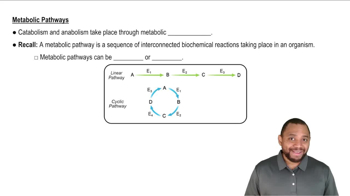
Metabolic pathways are sequences of chemical reactions occurring within a cell. The complete oxidation of glucose and fructose involves different pathways, including glycolysis, the citric acid cycle, and oxidative phosphorylation. Understanding these pathways is crucial for comparing the ATP yield from the oxidation of different carbohydrates.
Recommended video:
Guided course
0:52
Metabolic Pathways Concept 2