Pearson+ LogoPearson+ Logo
Ch.4 Molecular Compounds
McMurry - Fundamentals of GOB 8th Edition
McMurry8th EditionFundamentals of GOBISBN: 9780134015187Not the one you use?Change textbook
Chapter 4, Problem 88d

The following formulas are unlikely to be correct. What is wrong with each?
d. C2OS

Verified step by step guidance
1
Step 1: Understand the problem. The formula C₂OS represents a chemical compound, but it appears to be incorrectly written. Chemical formulas must follow specific rules for representing elements and their proportions in a compound.
Step 2: Review the rules for writing chemical formulas. Each element in a formula is represented by its chemical symbol (e.g., C for carbon, O for oxygen, S for sulfur). Subscripts indicate the number of atoms of each element in the compound. The formula should also reflect the correct stoichiometry and bonding arrangement.
Step 3: Analyze the formula C₂OS. The formula suggests there are 2 carbon atoms, 1 oxygen atom, and 1 sulfur atom. However, it does not specify how these atoms are bonded or arranged, which is crucial for determining the compound's validity.
Step 4: Consider common compounds containing carbon, oxygen, and sulfur. For example, carbonyl sulfide (COS) is a valid compound, but C₂OS does not correspond to a known or stable chemical structure. The issue may be that the formula does not represent a real compound or violates bonding rules.
Step 5: Conclude that the formula C₂OS is incorrect because it does not correspond to a known compound and fails to follow proper chemical notation or bonding rules. Suggest revisiting the intended compound and ensuring the formula accurately represents its structure.

Verified video answer for a similar problem:

This video solution was recommended by our tutors as helpful for the problem above.
Video duration:
1m
Was this helpful?

Key Concepts

Here are the essential concepts you must grasp in order to answer the question correctly.

Chemical Formula Structure

A chemical formula represents the elements in a compound and their respective quantities. In the case of C₂OS, the formula suggests a compound containing two carbon (C) atoms, one oxygen (O) atom, and one sulfur (S) atom. Understanding the correct representation of elements and their bonding is crucial for identifying inaccuracies in chemical formulas.
Recommended video:
Guided course
1:01
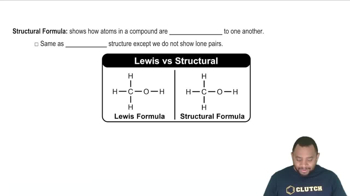
Structural Formula Concept 2

Valency and Bonding

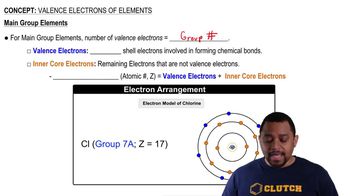
Valency refers to the combining capacity of an element, which is determined by the number of electrons in its outer shell. For example, carbon typically forms four bonds, while oxygen forms two and sulfur can form multiple bonds. Analyzing the valency of the elements in C₂OS helps to determine if the proposed formula is chemically feasible based on how these elements can bond.
Recommended video:
Guided course
01:55
Valence Electrons of Elements (Simplified) Concept 1

Common Chemical Compounds

Familiarity with common chemical compounds and their formulas aids in identifying errors in proposed formulas. C₂OS does not correspond to a well-known or stable compound, which raises questions about its validity. Recognizing established compounds helps in evaluating the plausibility of new or unfamiliar chemical formulas.
Recommended video:
Guided course
02:04
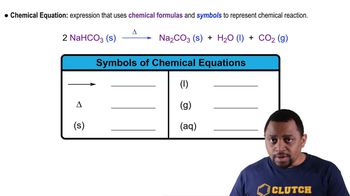
Chemical Reaction: Chemical Change Concept 2