Pearson+ LogoPearson+ Logo
Ch.12 Food as Fuel An Overview of Metabolism
Frost - General, Organic and Biological Chemistry 4th Edition
Frost4th EditionGeneral, Organic and Biological ChemistryISBN: 9780134988696Not the one you use?Change textbook
Chapter 8, Problem 101

Excess nitrogen in the body can form uric acid crystals responsible for the painful condition called gout. Besides proteins, name a biomolecule synthesized in the body that uses nitrogen.

Verified step by step guidance
1
Nitrogen is an essential element in the body and is used in the synthesis of various biomolecules. One such biomolecule is nucleic acids, which include DNA and RNA.
Nucleic acids are composed of nucleotide monomers, and each nucleotide contains a nitrogenous base. Examples of nitrogenous bases include adenine, guanine, cytosine, thymine (in DNA), and uracil (in RNA).
Nitrogen is a key component of these bases, which are classified as purines (adenine and guanine) or pyrimidines (cytosine, thymine, and uracil).
The synthesis of nucleic acids involves the incorporation of nitrogen into these bases during metabolic pathways such as the purine and pyrimidine biosynthesis pathways.
In addition to nucleic acids, nitrogen is also used in the synthesis of other biomolecules like neurotransmitters (e.g., serotonin and dopamine) and nitrogen-containing vitamins (e.g., niacin and folic acid).

Verified video answer for a similar problem:

This video solution was recommended by our tutors as helpful for the problem above.
Video duration:
2m
Was this helpful?

Key Concepts

Here are the essential concepts you must grasp in order to answer the question correctly.

Biomolecules

Biomolecules are organic molecules that are essential for life, including proteins, nucleic acids, carbohydrates, and lipids. They play critical roles in biological processes, serving as structural components, energy sources, and signaling molecules. Understanding the types of biomolecules and their functions is crucial for identifying which ones can be synthesized in the body using nitrogen.
Recommended video:
Guided course
1:09
Intro to Lipids Concept 2

Nitrogen Metabolism

Nitrogen metabolism refers to the biochemical processes that involve the incorporation and utilization of nitrogen in living organisms. This includes the synthesis of amino acids, nucleotides, and other nitrogen-containing compounds. Recognizing how nitrogen is utilized in the body helps in understanding the synthesis of various biomolecules beyond proteins.
Recommended video:
Guided course
3:16
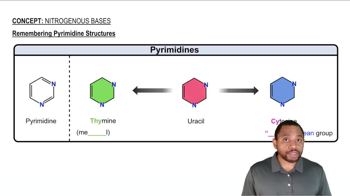
Nitrogenous Bases Concept 2

Uric Acid and Gout

Uric acid is a waste product formed from the breakdown of purines, which are nitrogen-containing compounds found in many foods and synthesized in the body. High levels of uric acid can lead to the formation of crystals in joints, causing gout, a painful inflammatory condition. This context highlights the importance of nitrogen in both health and disease, linking it to the synthesis of other biomolecules.
Recommended video: