Pearson+ LogoPearson+ Logo
Ch.12 Food as Fuel An Overview of Metabolism
Frost - General, Organic and Biological Chemistry 4th Edition
Frost4th EditionGeneral, Organic and Biological ChemistryISBN: 9780134988696Not the one you use?Change textbook
Chapter 8, Problem 58

Explain why diabetics produce high levels of ketone bodies.

Verified step by step guidance
1
Understand the role of glucose in energy production: Normally, the body uses glucose as its primary energy source. Insulin helps cells absorb glucose from the bloodstream for energy production.
Recognize the impact of diabetes on glucose metabolism: In diabetics, either the body does not produce enough insulin (Type 1 diabetes) or the cells are resistant to insulin (Type 2 diabetes). This leads to reduced glucose uptake by cells, causing the body to seek alternative energy sources.
Explain the shift to fat metabolism: When glucose is unavailable for energy, the body begins breaking down fats to produce energy. This process occurs in the liver and results in the production of molecules called ketone bodies.
Describe the production of ketone bodies: Ketone bodies, such as acetoacetate, β-hydroxybutyrate, and acetone, are formed during the breakdown of fatty acids in a process called ketogenesis. This occurs when the body is in a state of prolonged fasting or insulin deficiency.
Connect ketone body production to diabetes: In diabetics, the lack of insulin or insulin resistance leads to sustained fat metabolism and excessive production of ketone bodies. High levels of ketone bodies can result in a condition called ketoacidosis, which is dangerous and requires medical attention.

Verified video answer for a similar problem:

This video solution was recommended by our tutors as helpful for the problem above.
Video duration:
5m
Was this helpful?

Key Concepts

Here are the essential concepts you must grasp in order to answer the question correctly.

Diabetes and Insulin Deficiency

Diabetes, particularly Type 1 diabetes, is characterized by insufficient insulin production. Insulin is crucial for glucose uptake by cells, and when its levels are low, the body cannot effectively utilize glucose for energy. This leads to an increased reliance on fat metabolism, resulting in the production of ketone bodies as an alternative energy source.
Recommended video:
Guided course
1:41
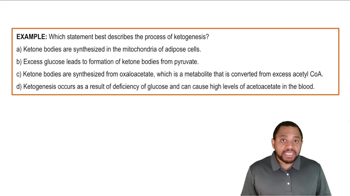
Ketone Bodies Example 1

Ketogenesis

Ketogenesis is the metabolic process through which the liver converts fatty acids into ketone bodies. This occurs when carbohydrate intake is low or when insulin levels are insufficient, prompting the body to break down fat for energy. Ketone bodies, such as acetoacetate and beta-hydroxybutyrate, can be used by various tissues, including the brain, as an energy source during periods of low glucose availability.
Recommended video:
Guided course
1:41
Ketone Bodies Example 1

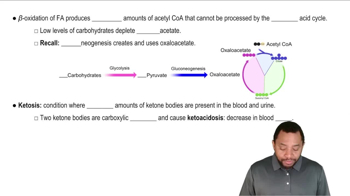
Ketoacidosis

Ketoacidosis is a serious complication of diabetes that arises when high levels of ketone bodies lead to a significant drop in blood pH. This condition occurs when the body produces excessive ketones, often due to uncontrolled diabetes, resulting in symptoms like nausea, vomiting, and abdominal pain. Understanding ketoacidosis is essential for recognizing the dangers of high ketone levels in diabetics and the need for proper management of blood glucose levels.
Recommended video:
Guided course
1:52
Ketone Bodies Concept 3