Pearson+ LogoPearson+ Logo
Ch.12 Food as Fuel An Overview of Metabolism
Frost - General, Organic and Biological Chemistry 4th Edition
Frost4th EditionGeneral, Organic and Biological ChemistryISBN: 9780134988696Not the one you use?Change textbook
Chapter 8, Problem 52c

List the energy yield in ATP molecules for each of the following:
c. Glucose → 2 lactate

Verified step by step guidance
1
Understand the process: The conversion of glucose to 2 lactate occurs during anaerobic glycolysis. This process does not involve oxygen and takes place in the cytoplasm of cells.
Recall the ATP yield in glycolysis: During glycolysis, one molecule of glucose is broken down into two molecules of pyruvate, producing 2 ATP molecules and 2 NADH molecules.
Account for the anaerobic conditions: In anaerobic conditions, pyruvate is converted to lactate. This step regenerates NAD⁺ from NADH, which is necessary to keep glycolysis running. However, no additional ATP is produced during this conversion.
Summarize the net ATP yield: Since no ATP is consumed or produced during the conversion of pyruvate to lactate, the net ATP yield for the entire process (glucose → 2 lactate) remains the 2 ATP molecules generated during glycolysis.
Conclude: The energy yield for the conversion of glucose to 2 lactate is 2 ATP molecules per glucose molecule.

Verified video answer for a similar problem:

This video solution was recommended by our tutors as helpful for the problem above.
Video duration:
2m
Was this helpful?

Key Concepts

Here are the essential concepts you must grasp in order to answer the question correctly.

Glycolysis

Glycolysis is the metabolic pathway that converts glucose into pyruvate, producing a net gain of 2 ATP molecules per glucose molecule. This process occurs in the cytoplasm and does not require oxygen, making it an anaerobic pathway. It is the first step in both aerobic and anaerobic respiration.
Recommended video:
Guided course
1:26
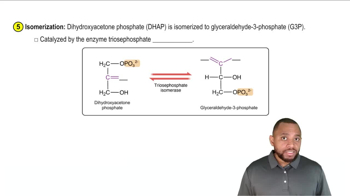
Glycolysis Concept 5

Lactic Acid Fermentation

Lactic acid fermentation is an anaerobic process that occurs when oxygen is scarce, converting pyruvate into lactate. This process regenerates NAD+, allowing glycolysis to continue and produce ATP. In the case of glucose converting to 2 lactate, the net ATP yield remains 2 ATP from glycolysis.
Recommended video:

ATP Yield

ATP yield refers to the amount of adenosine triphosphate (ATP) produced during metabolic processes. In the conversion of glucose to lactate, the total ATP yield is 2 ATP molecules, as no additional ATP is generated during the fermentation process. Understanding ATP yield is crucial for evaluating the efficiency of different metabolic pathways.
Recommended video:
Guided course
03:09
Percent Yield