Pearson+ LogoPearson+ Logo
Ch.12 Food as Fuel An Overview of Metabolism
Frost - General, Organic and Biological Chemistry 4th Edition
Frost4th EditionGeneral, Organic and Biological ChemistryISBN: 9780134988696Not the one you use?Change textbook
Chapter 8, Problem 25

In terms of high-energy molecules, what is the net output for one molecule of glucose undergoing glycolysis?

Verified step by step guidance
1
Understand the process of glycolysis: Glycolysis is the metabolic pathway where one molecule of glucose (C₆H₁₂O₆) is broken down into two molecules of pyruvate. This process occurs in the cytoplasm and involves a series of enzymatic reactions.
Identify the high-energy molecules involved: During glycolysis, ATP (adenosine triphosphate) and NADH (nicotinamide adenine dinucleotide) are the high-energy molecules produced. ATP is used as an energy currency, while NADH is an electron carrier.
Account for ATP usage and production: Glycolysis initially uses 2 ATP molecules during the energy investment phase. However, 4 ATP molecules are produced during the energy payoff phase, resulting in a net gain of 2 ATP molecules.
Determine NADH production: During glycolysis, 2 NADH molecules are produced when glucose is oxidized to form pyruvate. These NADH molecules can later be used in oxidative phosphorylation to generate more ATP.
Summarize the net output: The net output of glycolysis for one molecule of glucose is 2 ATP molecules and 2 NADH molecules. These high-energy molecules are crucial for cellular energy and further metabolic processes.

Verified video answer for a similar problem:

This video solution was recommended by our tutors as helpful for the problem above.
Video duration:
2m
Was this helpful?

Key Concepts

Here are the essential concepts you must grasp in order to answer the question correctly.

Glycolysis

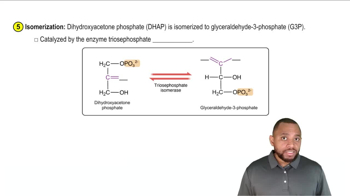
Glycolysis is a metabolic pathway that converts glucose into pyruvate, producing energy in the form of ATP and NADH. This process occurs in the cytoplasm of cells and consists of ten enzymatic reactions. It is the first step in cellular respiration and is anaerobic, meaning it does not require oxygen.
Recommended video:
Guided course
1:26
Glycolysis Concept 5

Net ATP Yield

The net ATP yield from glycolysis refers to the total amount of ATP produced minus the ATP consumed during the process. For one molecule of glucose, glycolysis typically yields a net gain of 2 ATP molecules. This is crucial for understanding the energy efficiency of glycolysis in cellular metabolism.
Recommended video:
Guided course
03:09
Percent Yield

NADH Production

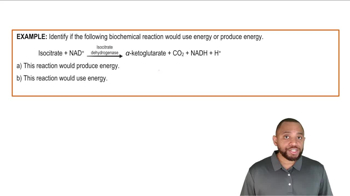
During glycolysis, two molecules of NADH are produced for each molecule of glucose. NADH serves as an electron carrier, playing a vital role in the electron transport chain, where it contributes to further ATP production. The generation of NADH is essential for cellular respiration and energy metabolism.
Recommended video:
Guided course
1:08
Energy Production In Biochemical Pathways Example 1