Pearson+ LogoPearson+ Logo
Ch.1 Matter and Measurements
McMurry - Fundamentals of GOB 8th Edition
McMurry8th EditionFundamentals of GOBISBN: 9780134015187Not the one you use?Change textbook
Chapter 1, Problem 40

Butane (C4H8) is an easily compressible gas used in cigarette lighters. It has a melting point of and a boiling point of -138.4 °C and a boiling point of -0.5 °C. Would you expect a butane lighter to work in winter when the temperature outdoors is 25 °F? Why or why not?

Verified step by step guidance
1
Step 1: Convert the outdoor temperature from Fahrenheit to Celsius using the formula: T°C=59(T°F-32). Plug in 25°F to calculate the equivalent temperature in Celsius.
Step 2: Compare the converted temperature to the boiling point of butane, which is 0.5°C. Recall that butane must be in the gaseous state to function in a lighter, and this occurs when the temperature is above its boiling point.
Step 3: If the outdoor temperature is below the boiling point of butane, it will remain in the liquid state and may not vaporize effectively to produce a flame. If the temperature is above the boiling point, butane will vaporize and the lighter should work.
Step 4: Consider the physical properties of butane and how temperature affects its phase. At temperatures below the boiling point, the kinetic energy of butane molecules is insufficient to overcome intermolecular forces, keeping it in the liquid phase.
Step 5: Based on the comparison, determine whether the outdoor temperature allows butane to vaporize and explain why this affects the functionality of the lighter in winter conditions.

Verified video answer for a similar problem:

This video solution was recommended by our tutors as helpful for the problem above.
Video duration:
3m
Was this helpful?

Key Concepts

Here are the essential concepts you must grasp in order to answer the question correctly.

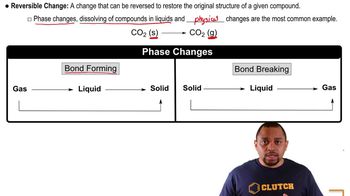
Phase Changes

Phase changes refer to the transitions between solid, liquid, and gas states of matter, which are influenced by temperature and pressure. For butane, its melting point (-138.4°C) indicates that it remains a gas at typical outdoor temperatures, while its boiling point (0.5°C) shows that it can condense into a liquid at lower temperatures. Understanding these phase changes is crucial for predicting the behavior of butane in different environmental conditions.
Recommended video:
Guided course
03:40
Physical & Chemical Changes

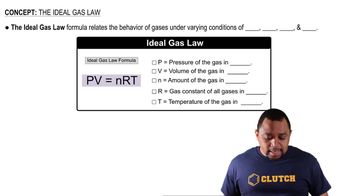
Temperature and Gas Behavior

The behavior of gases is significantly affected by temperature, as described by gas laws. At lower temperatures, gases can condense into liquids, which is relevant for butane in winter conditions. When the outdoor temperature is 25°F (-3.9°C), which is below butane's boiling point, the gas may not vaporize effectively, impacting the lighter's functionality.
Recommended video:
Guided course
01:15
The Ideal Gas Law Concept 1

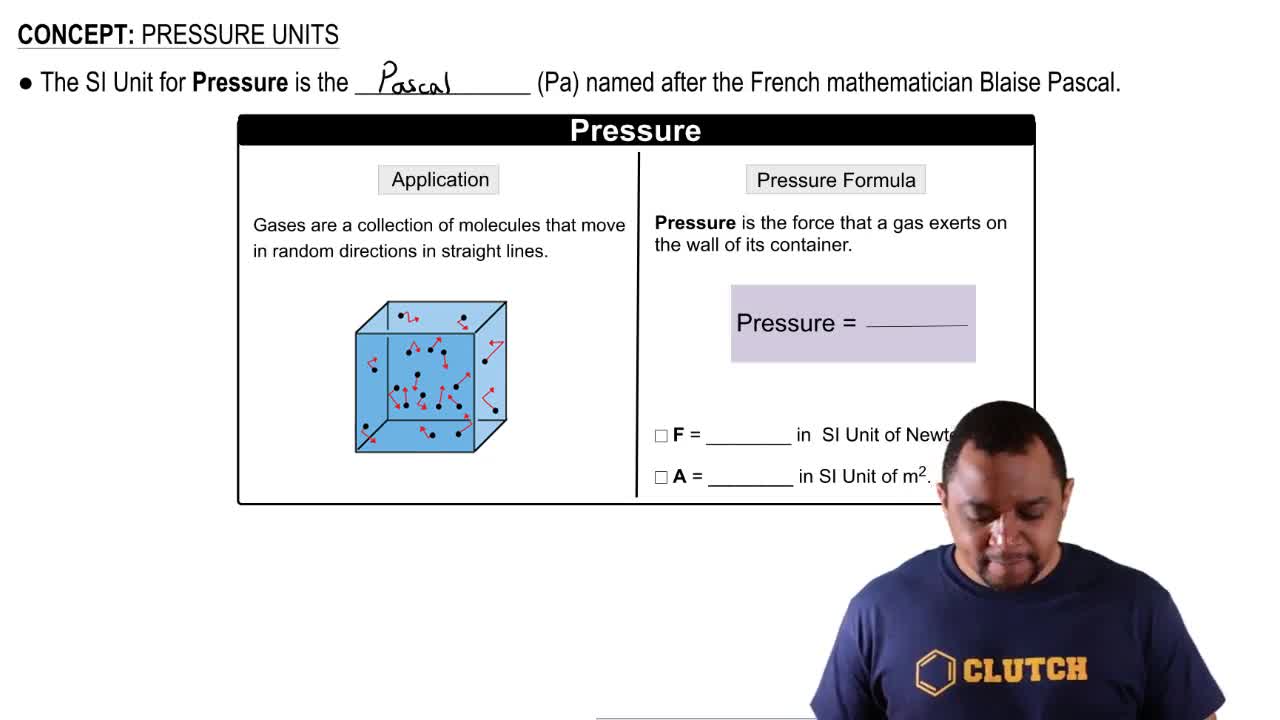
Pressure and Compression

Compression refers to the reduction of gas volume under pressure, which can affect its state and usability. Butane is easily compressible, allowing it to be stored as a liquid in lighters. However, if the temperature is too low, the pressure may not be sufficient to keep butane in a gaseous state, leading to difficulties in igniting the lighter in cold weather.
Recommended video:
Guided course
01:15
Pressure Units Concept 1