Pearson+ LogoPearson+ Logo
Ch.14 Some Compounds with Oxygen, Sulfur, or a Halogen
McMurry - Fundamentals of GOB 8th Edition
McMurry8th EditionFundamentals of GOBISBN: 9780134015187Not the one you use?Change textbook
Chapter 14, Problem 68e,f

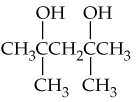
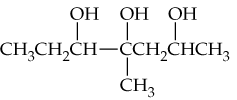
Name the following compounds:
e.
f. Structural formula of an organic compound with multiple hydroxyl (OH) groups and carbon chains.

Verified step by step guidance
1
Step 1: Analyze the structure of the compound in image (e). Identify the functional groups, the longest carbon chain, and any substituents attached to the chain.
Step 2: Determine the parent name of the compound in image (e) based on the number of carbon atoms in the longest chain and the type of functional group present (e.g., alkane, alkene, alkyne, alcohol, etc.).
Step 3: Assign locants (numbers) to the substituents and functional groups in image (e) to ensure the lowest possible numbering for the main functional group and substituents.
Step 4: Combine the substituent names, locants, and parent name to form the complete IUPAC name for the compound in image (e).
Step 5: Repeat steps 1-4 for the compound in image (f), following the same systematic approach to identify the functional groups, parent chain, substituents, and their positions, and then construct the IUPAC name.

Verified video answer for a similar problem:

This video solution was recommended by our tutors as helpful for the problem above.
Was this helpful?

Key Concepts

Here are the essential concepts you must grasp in order to answer the question correctly.

Nomenclature

Nomenclature refers to the systematic naming of chemical compounds based on established rules. The International Union of Pure and Applied Chemistry (IUPAC) provides guidelines for naming organic and inorganic compounds, ensuring that each name conveys specific information about the compound's structure and composition.
Recommended video:
Guided course
2:39
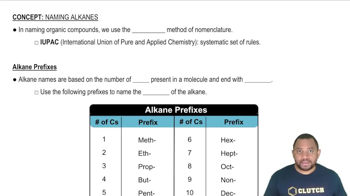
Rules for Naming Alkanes Concept 1

Functional Groups

Functional groups are specific groups of atoms within molecules that are responsible for the characteristic chemical reactions of those molecules. Understanding functional groups is essential for naming compounds, as they dictate the compound's reactivity and properties, influencing how the compound is classified and named.
Recommended video:
Guided course
1:11
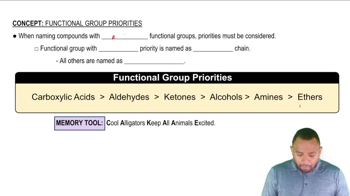
Functional Group Priorities Concept 1

Structural Representation

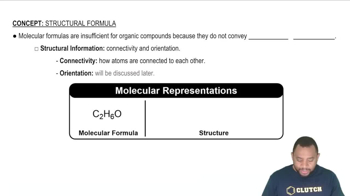
Structural representation involves depicting the arrangement of atoms within a molecule, which is crucial for understanding its chemical behavior. Different types of structural formulas, such as Lewis structures or condensed formulas, provide insights into the connectivity and geometry of the compound, aiding in accurate nomenclature.
Recommended video:
Guided course
2:08
Molecular Representations Concept 1