Pearson+ LogoPearson+ Logo
Ch.18 Amino Acids and Proteins
McMurry - Fundamentals of GOB 8th Edition
McMurry8th EditionFundamentals of GOBISBN: 9780134015187Not the one you use?Change textbook
Chapter 18, Problem 64a

Identify the amino acids present in the peptide shown and name the peptide using the three-letter abbreviations.

Verified step by step guidance
1
Examine the peptide structure provided and identify the side chains (R groups) attached to the alpha-carbon of each amino acid. These side chains are unique to each amino acid and will help you determine their identity.
Match the identified side chains to the corresponding amino acids using a reference chart of amino acid structures. Pay attention to distinguishing features such as aromatic rings, hydroxyl groups, or sulfur atoms.
List the amino acids in the order they appear in the peptide, starting from the N-terminus (the end with the free amino group) to the C-terminus (the end with the free carboxyl group).
Use the three-letter abbreviations for each amino acid (e.g., Gly for glycine, Ala for alanine) to name the peptide. Write the sequence in the same order as the amino acids appear in the peptide.
Double-check the sequence to ensure that the amino acids and their order are correct, and confirm that the peptide name is written using the standard three-letter abbreviations.

Verified video answer for a similar problem:

This video solution was recommended by our tutors as helpful for the problem above.
Was this helpful?

Key Concepts

Here are the essential concepts you must grasp in order to answer the question correctly.

Amino Acids

Amino acids are organic compounds that serve as the building blocks of proteins. Each amino acid consists of a central carbon atom, an amino group, a carboxyl group, a hydrogen atom, and a variable side chain (R group) that determines its unique properties. There are 20 standard amino acids, each represented by a three-letter abbreviation, such as Ala for alanine or Gly for glycine.
Recommended video:
Guided course
3:03
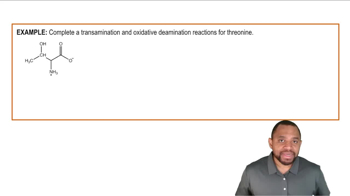
Amino Acid Catabolism: Amino Group Example 2

Peptide Structure

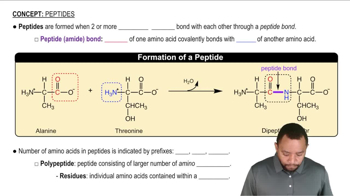
A peptide is a short chain of amino acids linked by peptide bonds, which are formed through a dehydration reaction between the amino group of one amino acid and the carboxyl group of another. The sequence and composition of amino acids in a peptide determine its structure and function. Peptides can vary in length, typically consisting of 2 to 50 amino acids.
Recommended video:
Guided course
3:07
Peptides Concept 1

Three-Letter Abbreviations

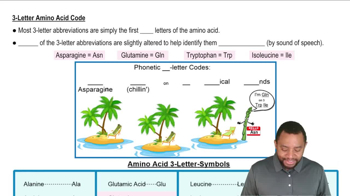
Three-letter abbreviations are standardized codes used to represent amino acids in a concise manner. This system simplifies the communication of peptide sequences in scientific literature and education. For example, the amino acid leucine is abbreviated as Leu, allowing for easier notation of peptide chains and facilitating discussions about protein structure and function.
Recommended video:
Guided course
2:18
Amino Acid Three Letter Codes Concept 2