Pearson+ LogoPearson+ Logo
Ch.18 Amino Acids and Proteins
McMurry - Fundamentals of GOB 8th Edition
McMurry8th EditionFundamentals of GOBISBN: 9780134015187Not the one you use?Change textbook
Chapter 18, Problem 1

Alcohol dehydrogenase, found in liver cells, converts ethanol into acetaldehyde. What type of protein is alcohol dehydrogenase?

Verified step by step guidance
1
Understand the role of alcohol dehydrogenase: It is an enzyme that catalyzes the oxidation of ethanol to acetaldehyde in the liver. Enzymes are a specific type of protein that act as biological catalysts.
Recall the definition of a catalyst: A catalyst is a substance that speeds up a chemical reaction without being consumed in the process. Enzymes, as biological catalysts, lower the activation energy required for reactions to occur.
Identify the specific function of alcohol dehydrogenase: It facilitates the conversion of ethanol (C₂H₅OH) into acetaldehyde (CH₃CHO) by removing hydrogen atoms, a process known as oxidation.
Classify alcohol dehydrogenase based on its function: Since it catalyzes a biochemical reaction, it is classified as an enzyme, which is a type of functional protein.
Conclude that alcohol dehydrogenase is a functional protein specifically categorized as an enzyme, which plays a critical role in metabolic pathways involving alcohol processing in the liver.

Verified video answer for a similar problem:

This video solution was recommended by our tutors as helpful for the problem above.
Was this helpful?

Key Concepts

Here are the essential concepts you must grasp in order to answer the question correctly.

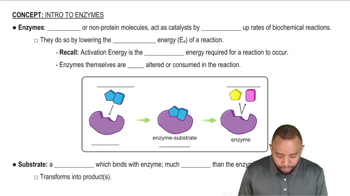
Enzymes

Enzymes are biological catalysts that speed up chemical reactions in the body without being consumed in the process. They are typically proteins that lower the activation energy required for reactions, allowing metabolic processes to occur efficiently. Alcohol dehydrogenase is an example of an enzyme that facilitates the conversion of ethanol to acetaldehyde.
Recommended video:
Guided course
2:14
Intro to Enzymes Concept 1

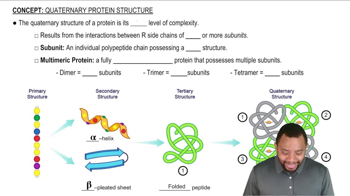
Protein Structure

Proteins are made up of long chains of amino acids that fold into specific three-dimensional shapes, which determine their function. The structure of a protein can be categorized into four levels: primary, secondary, tertiary, and quaternary. The specific folding of alcohol dehydrogenase is crucial for its enzymatic activity in metabolizing alcohol.
Recommended video:
Guided course
3:26
Quaternary Protein Structure Concept 1

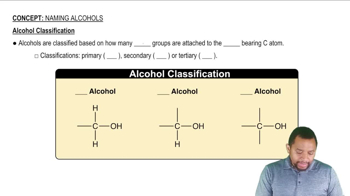
Metabolism of Alcohol

The metabolism of alcohol involves a series of biochemical reactions that convert ethanol into less toxic substances for elimination from the body. Alcohol dehydrogenase plays a key role in this process by converting ethanol into acetaldehyde, which is further metabolized by other enzymes. Understanding this pathway is essential for grasping the effects of alcohol consumption on the body.
Recommended video:
Guided course
1:10
Alcohol Classification Concept 2