Pearson+ LogoPearson+ Logo
Ch.19 Enzymes and Vitamins
McMurry - Fundamentals of GOB 8th Edition
McMurry8th EditionFundamentals of GOBISBN: 9780134015187Not the one you use?Change textbook
Chapter 19, Problem 32b

Name the vitamin to which each of these coenzymes is related.
b. Coenzyme A

Verified step by step guidance
1
Understand that coenzymes are organic molecules that assist enzymes in catalyzing reactions. They often derive from vitamins, which are essential nutrients.
Recall that Coenzyme A (CoA) is a coenzyme involved in various biochemical reactions, particularly in the metabolism of carbohydrates, fats, and proteins.
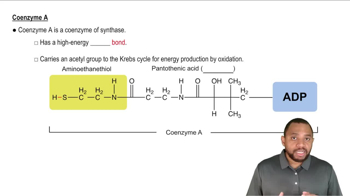
Recognize that Coenzyme A is derived from pantothenic acid, which is also known as vitamin B5.
Connect the role of pantothenic acid in the synthesis of Coenzyme A, emphasizing its importance in energy production and fatty acid metabolism.
Conclude that the vitamin related to Coenzyme A is pantothenic acid (vitamin B5).

Verified video answer for a similar problem:

This video solution was recommended by our tutors as helpful for the problem above.
Video duration:
1m
Was this helpful?

Key Concepts

Here are the essential concepts you must grasp in order to answer the question correctly.

Coenzyme A

Coenzyme A (CoA) is a vital coenzyme that plays a crucial role in the metabolism of fatty acids and the synthesis and oxidation of pyruvate. It is essential for the formation of acetyl-CoA, which is a key substrate in the citric acid cycle. CoA is derived from the vitamin pantothenic acid (vitamin B5), highlighting the connection between vitamins and coenzyme function in biochemical processes.
Recommended video:
Guided course
1:02
Coenzyme A Concept 4

Vitamins and Coenzymes

Vitamins are organic compounds that are essential for normal growth and nutrition, typically required in small quantities in the diet. Many vitamins serve as precursors to coenzymes, which are non-protein molecules that assist enzymes in catalyzing biochemical reactions. Understanding the relationship between vitamins and their corresponding coenzymes is crucial for grasping metabolic pathways and nutrient functions.
Recommended video:
Guided course
1:10
Coenzyme A Example 4

Metabolic Pathways

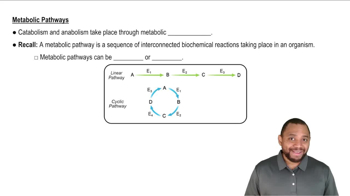
Metabolic pathways are series of chemical reactions occurring within a cell that lead to the conversion of substrates into products. These pathways are often regulated by enzymes, which require coenzymes like CoA to function effectively. Knowledge of these pathways is essential for understanding how nutrients, including vitamins, contribute to energy production and overall cellular function.
Recommended video:
Guided course
0:52
Metabolic Pathways Concept 2