Pearson+ LogoPearson+ Logo
Ch.21 The Generation of Biochemical Energy
McMurry - Fundamentals of GOB 8th Edition
McMurry8th EditionFundamentals of GOBISBN: 9780134015187Not the one you use?Change textbook
Chapter 21, Problem 21a

Each of these reactions is involved in one of the four stages of metabolism shown in Figure 21.4. Identify the stage in which each reaction occurs.
<IMAGE>
a. Hydrolysis of starch to produce glucose

Verified step by step guidance
1
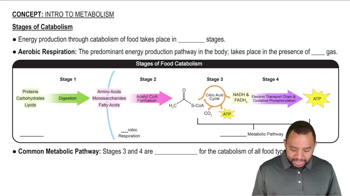
Understand the four stages of metabolism: (1) Digestion, (2) Acetyl-CoA production, (3) Citric acid cycle, and (4) ATP production via oxidative phosphorylation. Each stage has specific processes and reactions associated with it.
Recognize that the hydrolysis of starch to produce glucose involves breaking down a large carbohydrate (starch) into smaller, simpler sugar molecules (glucose). This is a catabolic process.
Recall that digestion is the first stage of metabolism, where macromolecules like carbohydrates, proteins, and fats are broken down into their monomeric units (e.g., glucose, amino acids, fatty acids).
Identify that the hydrolysis of starch is a digestive process catalyzed by enzymes like amylase, which breaks the glycosidic bonds in starch to release glucose molecules.
Conclude that the hydrolysis of starch to produce glucose occurs during the first stage of metabolism, which is digestion.

Verified video answer for a similar problem:

This video solution was recommended by our tutors as helpful for the problem above.
Video duration:
45s
Was this helpful?

Key Concepts

Here are the essential concepts you must grasp in order to answer the question correctly.

Metabolism

Metabolism refers to the set of life-sustaining chemical reactions in organisms. It is divided into two main categories: catabolism, which breaks down molecules to produce energy, and anabolism, which uses energy to construct components of cells. Understanding metabolism is crucial for identifying how different biochemical reactions contribute to energy production and utilization in living organisms.
Recommended video:
Guided course
0:52
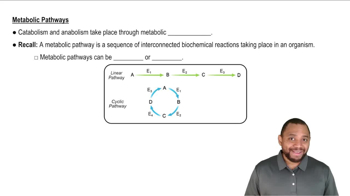
Metabolic Pathways Concept 2

Hydrolysis

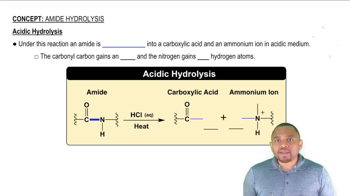
Hydrolysis is a chemical process that involves the breaking down of a compound by reaction with water. In the context of metabolism, hydrolysis is essential for the digestion of complex carbohydrates, such as starch, into simpler sugars like glucose. This process is vital for energy production, as glucose serves as a primary energy source for cells.
Recommended video:
Guided course
1:12
Acidic Hydrolysis Concept 1

Stages of Metabolism

The four stages of metabolism include glycolysis, the citric acid cycle, oxidative phosphorylation, and fermentation. Each stage plays a specific role in the conversion of nutrients into energy. Identifying which reactions occur in each stage helps in understanding the overall metabolic pathways and how energy is extracted from food sources.
Recommended video:
Guided course
2:33
Stages of Catabolism Concept 3