Pearson+ LogoPearson+ Logo
Ch.21 The Generation of Biochemical Energy
McMurry - Fundamentals of GOB 8th Edition
McMurry8th EditionFundamentals of GOBISBN: 9780134015187Not the one you use?Change textbook
Chapter 21, Problem 40

What is the difference between digestion and metabolism?

Verified step by step guidance
1
Digestion is the process by which food is broken down into smaller molecules in the digestive system, such as carbohydrates into glucose, proteins into amino acids, and fats into fatty acids and glycerol. This occurs through mechanical and chemical processes in the mouth, stomach, and intestines.
Metabolism refers to the chemical reactions that occur within cells to convert the molecules obtained from digestion into energy or building blocks for the body. It includes two main processes: catabolism (breaking down molecules to release energy) and anabolism (using energy to build complex molecules).
Digestion is a preparatory step for metabolism, as it provides the smaller molecules (e.g., glucose, amino acids) that are necessary for metabolic reactions to occur.
Digestion occurs outside of cells in the digestive tract, while metabolism occurs inside cells, primarily in the cytoplasm and mitochondria.
In summary, digestion is the breakdown of food into absorbable units, while metabolism involves the utilization of these units for energy production, growth, and repair within the body.

Verified video answer for a similar problem:

This video solution was recommended by our tutors as helpful for the problem above.
Video duration:
1m
Was this helpful?

Key Concepts

Here are the essential concepts you must grasp in order to answer the question correctly.

Digestion

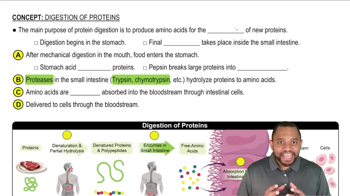
Digestion is the biological process by which food is broken down into smaller components, such as nutrients, that can be absorbed by the body. This process begins in the mouth and continues in the stomach and intestines, involving mechanical and chemical breakdown. The primary goal of digestion is to convert food into forms that can be utilized by the body's cells.
Recommended video:
Guided course
2:01
Digestion of Proteins Concept 1

Metabolism

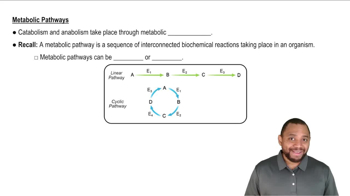
Metabolism refers to the sum of all chemical reactions that occur within the body to maintain life. It encompasses two main processes: catabolism, which breaks down molecules to release energy, and anabolism, which uses energy to construct cellular components. Metabolism is essential for energy production, growth, and the maintenance of cellular functions.
Recommended video:
Guided course
0:52
Metabolic Pathways Concept 2

Relationship between Digestion and Metabolism

The relationship between digestion and metabolism is sequential; digestion provides the necessary nutrients that metabolism utilizes to produce energy and support bodily functions. After digestion, the absorbed nutrients enter the bloodstream and are transported to cells, where metabolic processes convert them into energy or use them for building and repairing tissues. Understanding this relationship is crucial for comprehending how the body processes food and maintains homeostasis.
Recommended video:
Guided course
04:56
Logarithmic Relationships