
Textbook Question
Glucose 6-phosphate is in a pivotal position in metabolism. Depending on conditions, glucose 6-phosphate follows one of several pathways. Under what conditions do the following occur?
d. Glycogenesis
691
views

 Verified step by step guidance
 1:23
1:23
 1:38
1:38 1:21
1:21Glucose 6-phosphate is in a pivotal position in metabolism. Depending on conditions, glucose 6-phosphate follows one of several pathways. Under what conditions do the following occur?
d. Glycogenesis
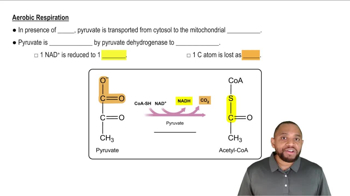
The pathway that converts glucose to acetyl-CoA is often referred to as an “aerobic oxidation pathway.”
(b) Thinking back to Chapter 20, where does molecular oxygen enter the picture?
Outline the conditions that direct pyruvate toward the following:
c. Conversion to lactate
In what tissues or organisms is each pathway present?
Fatty acids from stored triacylglycerols (fat) are not available for gluconeogenesis. Speculate why we do not have the enzymes to directly convert fatty acids into glucose. Plants (especially seeds) do have enzymes to convert fatty acids into carbohydrates. Why are they so lucky?
Outline the conditions that direct pyruvate toward the following:
b. Conversion to ethanol and CO2
In what tissues or organisms is each pathway present?
Name the molecules used for gluconeogenesis. What are the sources of these molecules? Under what conditions would gluconeogenesis occur?