Pearson+ LogoPearson+ Logo
Ch.22 Carbohydrate Metabolism
McMurry - Fundamentals of GOB 8th Edition
McMurry8th EditionFundamentals of GOBISBN: 9780134015187Not the one you use?Change textbook
Chapter 22, Problem 75

Why is it important for muscle cells to export lactate into the bloodstream during heavy exercise?

Verified step by step guidance
1
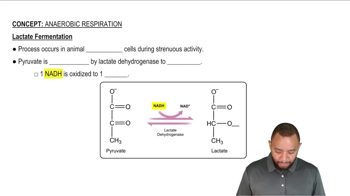
During heavy exercise, muscle cells rely on anaerobic respiration due to insufficient oxygen supply. This process converts glucose into energy (ATP) and produces lactate as a byproduct.
Lactate accumulation in muscle cells can lower the pH of the cells, leading to an acidic environment that can impair enzyme function and muscle contraction.
To prevent this, muscle cells export lactate into the bloodstream, where it can be transported to other tissues, such as the liver, for further processing.
In the liver, lactate can be converted back into glucose through a process called gluconeogenesis, which helps maintain blood glucose levels and provides energy for continued activity.
This export of lactate and its subsequent processing in the liver is part of the Cori cycle, which is essential for maintaining energy balance and preventing muscle fatigue during intense exercise.

Verified video answer for a similar problem:

This video solution was recommended by our tutors as helpful for the problem above.
Video duration:
3m
Was this helpful?

Key Concepts

Here are the essential concepts you must grasp in order to answer the question correctly.

Lactate Production

Lactate is produced during anaerobic respiration when muscle cells generate energy without sufficient oxygen. This process occurs primarily during intense exercise when the demand for energy exceeds the oxygen supply, leading to the conversion of pyruvate into lactate. Understanding lactate production is crucial for grasping how muscles adapt to high-intensity activities.
Recommended video:
Guided course
01:37
Solubility Product Constant (Ksp) Concept 2

Lactate Clearance

Exporting lactate into the bloodstream allows for its clearance from muscle cells, preventing acidosis and maintaining pH balance. Once in the bloodstream, lactate can be transported to other tissues, such as the liver, where it can be converted back into glucose through gluconeogenesis. This process is vital for sustaining energy levels during prolonged exercise.
Recommended video:
Guided course
1:14
Anaerobic Respiration Concept 3

Energy Metabolism

During heavy exercise, muscle cells rely on different energy pathways to meet increased demands. The shift from aerobic to anaerobic metabolism leads to lactate accumulation, which serves as an alternative energy source. Understanding energy metabolism helps explain why lactate export is essential for maintaining performance and preventing fatigue during intense physical activity.
Recommended video:
Guided course
1:23
Intro to Metabolism Concept 1