Pearson+ LogoPearson+ Logo
Ch.26 Nucleic Acids and Protein Synthesis
McMurry - Fundamentals of GOB 8th Edition
McMurry8th EditionFundamentals of GOBISBN: 9780134015187Not the one you use?Change textbook
Chapter 26, Problem 13

What is the difference between DNA polymerase and DNA ligase?

Verified step by step guidance
1
DNA polymerase is an enzyme responsible for synthesizing new DNA strands by adding nucleotides to a pre-existing strand or primer during DNA replication. It ensures the accurate copying of the genetic material.
DNA ligase is an enzyme that joins DNA fragments together by forming phosphodiester bonds between the sugar-phosphate backbones of adjacent nucleotides. It is essential for sealing nicks in the DNA strand.
DNA polymerase works during the elongation phase of DNA replication, where it extends the DNA strand in the 5' to 3' direction, using the template strand to ensure complementary base pairing.
DNA ligase is primarily involved in the final stages of DNA replication or repair, where it connects Okazaki fragments on the lagging strand or repairs breaks in the DNA backbone.
In summary, DNA polymerase builds new DNA strands, while DNA ligase ensures the integrity and continuity of the DNA molecule by sealing gaps or breaks.

Verified video answer for a similar problem:

This video solution was recommended by our tutors as helpful for the problem above.
Video duration:
6m
Was this helpful?

Key Concepts

Here are the essential concepts you must grasp in order to answer the question correctly.

DNA Polymerase

DNA polymerase is an enzyme responsible for synthesizing new DNA strands by adding nucleotides to a growing chain during DNA replication. It plays a crucial role in copying the genetic material, ensuring that each daughter cell receives an accurate copy of the DNA. There are several types of DNA polymerases, each with specific functions, including proofreading and repairing DNA.
Recommended video:
Guided course
1:31
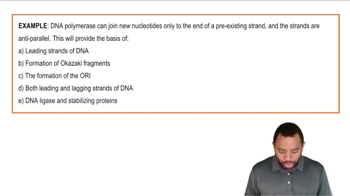
Steps of DNA Replication Example 1

DNA Ligase

DNA ligase is an enzyme that facilitates the joining of DNA strands together by forming phosphodiester bonds. It is essential for sealing nicks and gaps in the DNA backbone, particularly during DNA replication and repair processes. DNA ligase ensures the integrity of the DNA molecule, allowing for the proper functioning of genetic information.
Recommended video:
Guided course
5:08
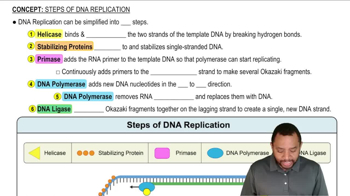
Steps of DNA Replication Concept 1

DNA Replication

DNA replication is the biological process by which a cell duplicates its DNA, resulting in two identical copies. This process involves several key enzymes, including DNA polymerase and DNA ligase, which work together to ensure accurate and complete replication. Understanding the roles of these enzymes is vital for grasping how genetic information is transmitted during cell division.
Recommended video:
Guided course
1:40
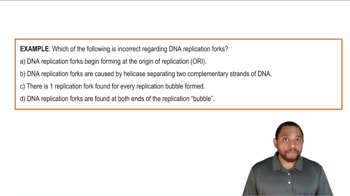
Intro to DNA Replication Example 2