Ch.23 Lipids
McMurry - Fundamentals of General, Organic, and Biological Chemistry 8th Edition
McMurry8th EditionFundamentals of General, Organic, and Biological ChemistryISBN: 9780134015187당신이 사용하는 게 아니라요?교과서 변경
23장, 문제 52c

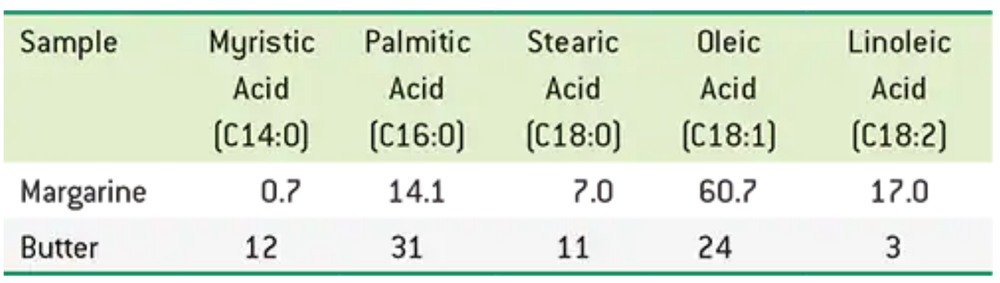
Dietary guidelines suggest we limit our intake of butter due to the cholesterol content and substitute oils or margarine. The following table shows the major fatty acid distribution for a typical stick of margarine and also for butter. Values are percentages.
Table comparing fatty acid distribution percentages in margarine and butter, highlighting myristic, palmitic, stearic, oleic, and linoleic acids.
c. Which is likely to contain fewer trans-fatty acids

검증된 단계별 안내
1
Understand the context: Trans-fatty acids are unsaturated fats that have been chemically altered through a process called hydrogenation. They are often found in processed foods and can increase the risk of heart disease. Margarine, especially older formulations, is known to sometimes contain trans fats due to partial hydrogenation of vegetable oils.
Examine the table provided in the problem (not shown here). Look for any mention of trans-fatty acids or clues about the type of fatty acids present in margarine and butter. If the table lists 'trans fats' explicitly, compare the percentages directly.
If the table does not explicitly list trans fats, consider the source of the fats. Butter is a natural product derived from animal fat and typically contains little to no trans fats unless processed. Margarine, on the other hand, is made from vegetable oils that may undergo hydrogenation, potentially introducing trans fats.
Consider modern dietary trends: Many modern margarines are now formulated to be trans-fat-free due to health concerns. If the table specifies that the margarine is 'trans-fat-free' or uses terms like 'non-hydrogenated,' it is likely to contain fewer trans-fatty acids than butter.
Conclude based on the data: If the table or problem provides specific information about the trans-fat content, use that to determine which product contains fewer trans-fatty acids. If no explicit data is given, rely on the general knowledge that modern margarines are often designed to minimize or eliminate trans fats, making them likely to contain fewer trans-fatty acids than butter.

비슷한 문제에 대한 검증된 영상 답변:

이 영상 해법은 위 문제에 도움이 된다고 튜터들이 추천한 것입니다.
영상 길이:
3m
도움이 되었나요?

주요 개념

질문에 올바르게 답하기 위해 반드시 이해해야 하는 핵심 개념들은 다음과 같습니다.

Trans-Fatty Acids

Trans-fatty acids are a type of unsaturated fat that can be harmful to health. They are often created during the hydrogenation process, which solidifies liquid oils. These fats can raise LDL (bad cholesterol) levels while lowering HDL (good cholesterol), increasing the risk of heart disease. Understanding the presence of trans-fats in margarine versus butter is crucial for making healthier dietary choices.
추천 영상:
가이드 코스
2:26
Fatty Acids Concept 2

Fatty Acid Composition

Fatty acid composition refers to the types and proportions of fatty acids present in a food product. Different fats, such as saturated, monounsaturated, and polyunsaturated fats, have varying effects on health. Margarine typically contains more unsaturated fats compared to butter, which is higher in saturated fats. Analyzing the fatty acid distribution helps determine the health implications of each option.
추천 영상:
가이드 코스
2:00
Fatty Acids Concept 1

Dietary Guidelines

Dietary guidelines are recommendations designed to promote health and reduce the risk of chronic diseases. They often advise limiting saturated fats and trans fats while encouraging the consumption of healthier fats, such as those found in oils. Understanding these guidelines is essential for making informed choices about fat consumption, particularly when comparing butter and margarine.
추천 영상:
가이드 코스
1:27
Lipoproteins for Transport Example 1