
Ch.23 Lipids
McMurry - Fundamentals of General, Organic, and Biological Chemistry 8th Edition
McMurry8th EditionFundamentals of General, Organic, and Biological ChemistryISBN: 9780134015187당신이 사용하는 게 아니라요?교과서 변경
23장, 문제 52a

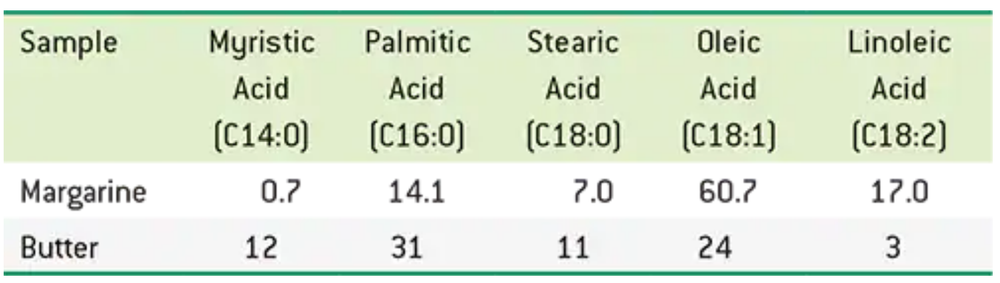
Dietary guidelines suggest we limit our intake of butter due to the cholesterol content and substitute oils or margarine. The following table shows the major fatty acid distribution for a typical stick of margarine and also for butter. Values are percentages.
Table comparing fatty acid distribution percentages in margarine and butter, highlighting monounsaturated fatty acids.
a. Which contains more monounsaturated fatty acids?

검증된 단계별 안내
1
Step 1: Understand the problem. The question asks us to compare the percentage of monounsaturated fatty acids in margarine and butter. Monounsaturated fatty acids are a type of fat with one double bond in their structure, and their percentage is provided in the table.
Step 2: Locate the relevant data in the table. Identify the percentage of monounsaturated fatty acids for both margarine and butter from the given table.
Step 3: Compare the values. Determine which of the two (margarine or butter) has a higher percentage of monounsaturated fatty acids by directly comparing the numerical values.
Step 4: Conclude based on the comparison. State which product (margarine or butter) contains more monounsaturated fatty acids based on the higher percentage value.
Step 5: Reflect on the significance. Explain why monounsaturated fatty acids are considered healthier fats and how this information might influence dietary choices.

비슷한 문제에 대한 검증된 영상 답변:

이 영상 해법은 위 문제에 도움이 된다고 튜터들이 추천한 것입니다.
영상 길이:
2m
도움이 되었나요?

주요 개념

질문에 올바르게 답하기 위해 반드시 이해해야 하는 핵심 개념들은 다음과 같습니다.

Fatty Acids

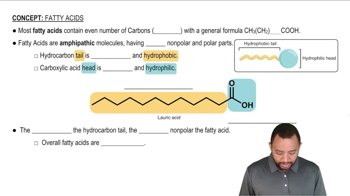
Fatty acids are the building blocks of fats in our diet and are categorized into three main types: saturated, monounsaturated, and polyunsaturated. Monounsaturated fatty acids (MUFAs) are known for their health benefits, including improving cholesterol levels and reducing the risk of heart disease. Understanding the distribution of these fatty acids in foods like butter and margarine is essential for making informed dietary choices.
추천 영상:
가이드 코스
2:00
Fatty Acids Concept 1

Cholesterol

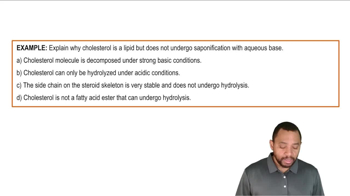
Cholesterol is a waxy substance found in the blood and cells, essential for producing hormones and vitamin D. However, high levels of cholesterol, particularly low-density lipoprotein (LDL), can lead to heart disease. Dietary guidelines recommend limiting saturated fats, which can raise cholesterol levels, and opting for healthier fats, such as those found in oils and margarine, to maintain heart health.
추천 영상:
가이드 코스
1:35
Steroids Example 1

Dietary Guidelines

Dietary guidelines are evidence-based recommendations designed to promote health and reduce the risk of chronic diseases. They provide advice on food choices, portion sizes, and nutrient intake, emphasizing the importance of a balanced diet. In the context of the question, these guidelines suggest limiting butter due to its saturated fat content and cholesterol, advocating for healthier alternatives like margarine or oils.
추천 영상:
가이드 코스
1:27
Lipoproteins for Transport Example 1