Ch.26 Nucleic Acids and Protein Synthesis
McMurry - Fundamentals of General, Organic, and Biological Chemistry 8th Edition
McMurry8th EditionFundamentals of General, Organic, and Biological ChemistryISBN: 9780134015187당신이 사용하는 게 아니라요?교과서 변경
26장, 문제 13

What is the difference between DNA polymerase and DNA ligase?

검증된 단계별 안내
1
DNA polymerase is an enzyme responsible for synthesizing new DNA strands by adding nucleotides to a pre-existing strand or primer during DNA replication. It ensures the accurate copying of the genetic material.
DNA ligase is an enzyme that joins DNA fragments together by forming phosphodiester bonds between the sugar-phosphate backbones of adjacent nucleotides. It is essential for sealing nicks in the DNA strand.
DNA polymerase works during the elongation phase of DNA replication, where it extends the DNA strand in the 5' to 3' direction, using the template strand to ensure complementary base pairing.
DNA ligase is primarily involved in the final stages of DNA replication or repair, where it connects Okazaki fragments on the lagging strand or repairs breaks in the DNA backbone.
In summary, DNA polymerase builds new DNA strands, while DNA ligase ensures the integrity and continuity of the DNA molecule by sealing gaps or breaks.

비슷한 문제에 대한 검증된 영상 답변:

이 영상 해법은 위 문제에 도움이 된다고 튜터들이 추천한 것입니다.
영상 길이:
6m
도움이 되었나요?

주요 개념

질문에 올바르게 답하기 위해 반드시 이해해야 하는 핵심 개념들은 다음과 같습니다.

DNA Polymerase

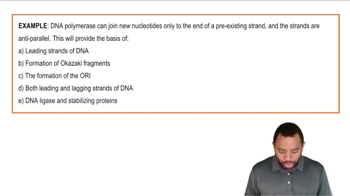
DNA polymerase is an enzyme responsible for synthesizing new DNA strands by adding nucleotides to a growing chain during DNA replication. It plays a crucial role in copying the genetic material, ensuring that each daughter cell receives an accurate copy of the DNA. There are several types of DNA polymerases, each with specific functions, including proofreading and repairing DNA.
추천 영상:
가이드 코스
1:31
Steps of DNA Replication Example 1

DNA Ligase

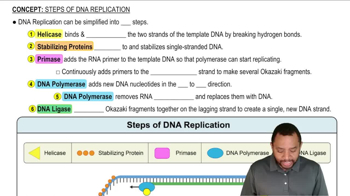
DNA ligase is an enzyme that facilitates the joining of DNA strands together by forming phosphodiester bonds. It is essential for sealing nicks and gaps in the DNA backbone, particularly during DNA replication and repair processes. DNA ligase ensures the integrity of the DNA molecule, allowing for the proper functioning of genetic information.
추천 영상:
가이드 코스
5:08
Steps of DNA Replication Concept 1

DNA Replication

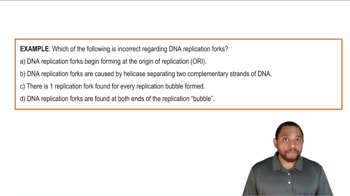
DNA replication is the biological process by which a cell duplicates its DNA, resulting in two identical copies. This process involves several key enzymes, including DNA polymerase and DNA ligase, which work together to ensure accurate and complete replication. Understanding the roles of these enzymes is vital for grasping how genetic information is transmitted during cell division.
추천 영상:
가이드 코스
1:40
Intro to DNA Replication Example 2