Name the bases in the pentanucleotide with the sequence G-A-U-C-A. Does this come from RNA or DNA? Explain.
Ch.26 Nucleic Acids and Protein Synthesis
McMurry8th EditionFundamentals of General, Organic, and Biological ChemistryISBN: 9780134015187당신이 사용하는 게 아니라요?교과서 변경
26장, 문제 10
Is a DNA molecule neutral, negatively charged, or positively charged? Explain.
검증된 단계별 안내1
DNA molecules are composed of nucleotides, which consist of a sugar (deoxyribose), a phosphate group, and a nitrogenous base.
The phosphate group in each nucleotide contains a negatively charged oxygen atom, which gives the DNA molecule an overall negative charge.
These negatively charged phosphate groups are present along the backbone of the DNA molecule, making the entire structure negatively charged.
The negative charge of DNA is important for its interactions with other molecules, such as positively charged proteins (e.g., histones) that help in DNA packaging.
In summary, a DNA molecule is negatively charged due to the presence of phosphate groups in its structure.

비슷한 문제에 대한 검증된 영상 답변:
이 영상 해법은 위 문제에 도움이 된다고 튜터들이 추천한 것입니다.
영상 길이:
1m도움이 되었나요?
주요 개념
질문에 올바르게 답하기 위해 반드시 이해해야 하는 핵심 개념들은 다음과 같습니다.
DNA Structure
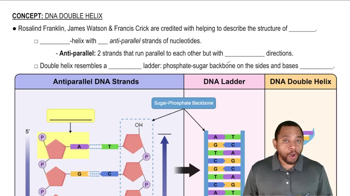
DNA, or deoxyribonucleic acid, is a molecule composed of two strands that coil around each other to form a double helix. Each strand is made up of nucleotides, which consist of a sugar, a phosphate group, and a nitrogenous base. The phosphate groups in the backbone of the DNA contribute to its overall charge.
추천 영상:
가이드 코스
DNA Double Helix Concept 1
Charge of DNA
DNA molecules are negatively charged due to the presence of phosphate groups in their structure. Each phosphate group carries a negative charge, which results in the overall negative charge of the DNA molecule. This charge plays a crucial role in the interactions of DNA with proteins and other molecules in the cell.
추천 영상:
가이드 코스
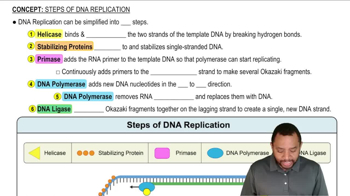
Steps of DNA Replication Concept 1
Biological Implications of Charge
The negative charge of DNA is significant for its biological functions, including its interaction with positively charged proteins, such as histones, which help package DNA into chromatin. This charge also influences the behavior of DNA during processes like electrophoresis, where DNA fragments are separated based on size and charge.
추천 영상:
가이드 코스
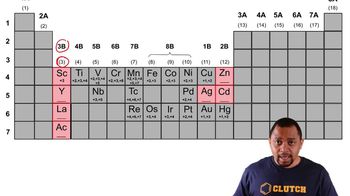
Periodic Table: Transition Metals Charges Concept 1
관련 실천
교과서 질문
891
views
교과서 질문
What is the difference between DNA polymerase and DNA ligase?
833
views
교과서 질문
Draw the structures of adenine and uracil (which replaces thymine in RNA), and show the hydrogen bonding that occurs between them.
853
views
교과서 질문
What are Okazaki fragments? What role do they serve in DNA metabolism?
590
views
교과서 질문
Write the complementary sequence of bases for each DNA strand shown next.
a. 5′T-A-T-A-C-T-G 3′
665
views
교과서 질문
DNA and RNA, like proteins, can be denatured to produce unfolded or uncoiled strands. Heating DNA to what is referred to as its “melting temperature” denatures it (the two strands of the double helix become separated). Why does a longer strand of DNA have a higher melting temperature than a shorter one?
692
views