Ch.26 Nucleic Acids and Protein Synthesis
McMurry - Fundamentals of General, Organic, and Biological Chemistry 8th Edition
McMurry8th EditionFundamentals of General, Organic, and Biological ChemistryISBN: 9780134015187당신이 사용하는 게 아니라요?교과서 변경
26장, 문제 11a

DNA and RNA, like proteins, can be denatured to produce unfolded or uncoiled strands. Heating DNA to what is referred to as its “melting temperature” denatures it (the two strands of the double helix become separated). Why does a longer strand of DNA have a higher melting temperature than a shorter one?

검증된 단계별 안내
1
Understand the concept of DNA melting temperature: The melting temperature (Tm) is the temperature at which half of the DNA strands in a sample are denatured, meaning the hydrogen bonds between the complementary base pairs are broken, and the double helix separates into single strands.
Recognize that DNA stability is influenced by the number of hydrogen bonds: Each base pair in DNA contributes to the overall stability of the molecule. Guanine (G) and cytosine (C) pairs form three hydrogen bonds, while adenine (A) and thymine (T) pairs form two hydrogen bonds. More base pairs mean more hydrogen bonds, which require more energy (heat) to break.
Consider the length of the DNA strand: A longer DNA strand has more base pairs compared to a shorter strand. This means there are more hydrogen bonds in a longer strand, making it more stable and requiring a higher temperature to denature.
Account for cooperative interactions: In a DNA molecule, the breaking of one hydrogen bond can destabilize neighboring bonds, but this effect is more pronounced in shorter strands. Longer strands have more regions of stability, which collectively resist denaturation, leading to a higher melting temperature.
Conclude that the melting temperature increases with strand length: The greater number of hydrogen bonds and the cooperative stability of longer DNA strands explain why they have a higher melting temperature compared to shorter strands.

비슷한 문제에 대한 검증된 영상 답변:

이 영상 해법은 위 문제에 도움이 된다고 튜터들이 추천한 것입니다.
영상 길이:
3m
도움이 되었나요?

주요 개념

질문에 올바르게 답하기 위해 반드시 이해해야 하는 핵심 개념들은 다음과 같습니다.

Melting Temperature (Tm)

The melting temperature (Tm) of DNA is the temperature at which half of the DNA strands are in the double-helix state and half are in the 'melted' single-strand state. Tm is influenced by the length of the DNA strands and their nucleotide composition, particularly the number of guanine-cytosine (GC) pairs, which form three hydrogen bonds compared to the two formed by adenine-thymine (AT) pairs.
추천 영상:
가이드 코스
02:10
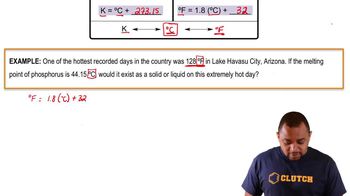
Temperature (Simplified) Example 2

Hydrogen Bonds in DNA

DNA strands are held together by hydrogen bonds between complementary base pairs. Each GC pair contributes three hydrogen bonds, while each AT pair contributes two. Therefore, longer DNA strands, which typically contain more GC pairs, have more hydrogen bonds, resulting in greater stability and a higher melting temperature compared to shorter strands.
추천 영상:
가이드 코스
1:22
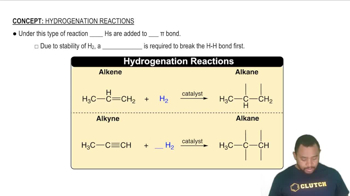
Hydrogenation Reactions Concept 1

Strand Length and Stability

The length of a DNA strand directly affects its stability due to the cumulative effect of base pairing. Longer strands have more base pairs, leading to increased hydrogen bonding and van der Waals interactions, which collectively enhance the stability of the double helix. This increased stability translates to a higher melting temperature, as more energy (in the form of heat) is required to separate the strands.
추천 영상:
가이드 코스
2:25
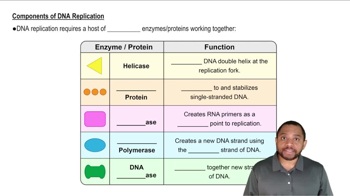
Intro to DNA Replication Concept 2