Ch. 12 - Radicals
Bruice - Organic Chemistry 8th Edition
Bruice8th EditionOrganic ChemistryISBN: 9780135213711당신이 사용하는 게 아니라요?교과서 변경
12장, 문제 40c

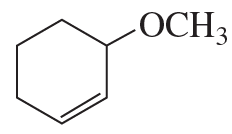
Starting with cyclohexane, how could the following compounds be prepared?
c. Cyclohexane structure with a methoxy group (OCH3) attached, illustrating a radical reaction concept.

검증된 단계별 안내
1
Step 1: Begin with cyclohexane as the starting material. To introduce a double bond into the cyclohexane ring, perform a dehydrogenation reaction. This can be achieved using a catalyst such as platinum, palladium, or nickel under high temperature to convert cyclohexane into cyclohexene.
Step 2: To introduce the methoxy group (-OCH3) at the allylic position, perform an allylic bromination on cyclohexene. Use N-bromosuccinimide (NBS) in the presence of light or heat to selectively brominate the allylic position, forming allyl bromocyclohexene.
Step 3: Replace the bromine atom with a methoxy group (-OCH3) through a nucleophilic substitution reaction. React allyl bromocyclohexene with sodium methoxide (NaOCH3) in methanol to achieve this substitution.
Step 4: Verify the structure of the product to ensure the methoxy group is correctly positioned at the allylic carbon and the double bond remains intact in the cyclohexene ring.
Step 5: Purify the final product using techniques such as distillation or chromatography to isolate the desired compound.

비슷한 문제에 대한 검증된 영상 답변:

이 영상 해법은 위 문제에 도움이 된다고 튜터들이 추천한 것입니다.
영상 길이:
6m
도움이 되었나요?

주요 개념

질문에 올바르게 답하기 위해 반드시 이해해야 하는 핵심 개념들은 다음과 같습니다.

Radical Reactions

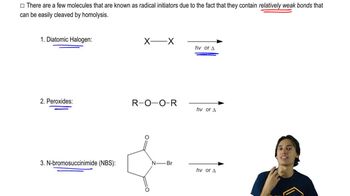
Radical reactions involve the formation and reaction of free radicals, which are highly reactive species with unpaired electrons. These reactions often proceed through initiation, propagation, and termination steps. Understanding how radicals can be generated from cyclohexane, such as through halogenation or thermal decomposition, is crucial for synthesizing more complex structures.
추천 영상:
03:49
What are Radical Initiators?

Cyclohexane Derivatives

Cyclohexane can be transformed into various derivatives through functionalization reactions. This includes the introduction of functional groups like alcohols, halides, or alkenes. Recognizing how to manipulate the cyclohexane structure to create derivatives is essential for preparing the target compound shown in the image.
추천 영상:
02:49
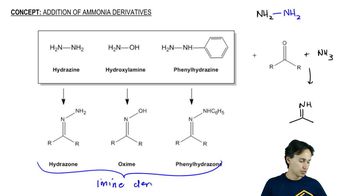
Ammonia Derivatives

Electrophilic Aromatic Substitution

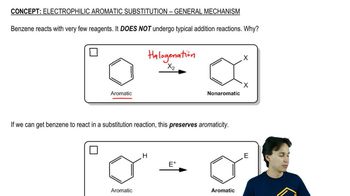
Electrophilic aromatic substitution (EAS) is a key reaction mechanism in organic chemistry where an electrophile replaces a hydrogen atom on an aromatic ring. This process is vital for modifying aromatic compounds derived from cyclohexane. Understanding the conditions and reagents that facilitate EAS will help in synthesizing the desired compound from cyclohexane derivatives.
추천 영상:
03:07
EAS Review