Ch. 14 - Structural Identification 1: Infrared Spectroscopy and Mass Spectrometry
Mullins - Organic Chemistry: A Learner Centered Approach 1st Edition
Mullins1st EditionOrganic Chemistry: A Learner Centered ApproachISBN: 9780137566471당신이 사용하는 게 아니라요?교과서 변경
13장, 문제 29

The molecule that gave the mass spectrum shown here contains a halogen. Which halogen is present?
<IMAGE>

검증된 단계별 안내
1
Examine the mass spectrum for the presence of a molecular ion peak and its isotopic pattern. Halogens have characteristic isotopic patterns that can help identify them.
Identify the molecular ion peak (M) in the mass spectrum. This peak represents the molecular weight of the compound.
Look for additional peaks that are close in mass to the molecular ion peak. Halogens like chlorine and bromine have isotopes that create distinct patterns.
For chlorine, expect a pattern with two peaks: M and M+2, with a relative intensity ratio of approximately 3:1 due to the presence of 35Cl and 37Cl isotopes.
For bromine, expect a pattern with two peaks: M and M+2, with a relative intensity ratio of approximately 1:1 due to the presence of 79Br and 81Br isotopes.

비슷한 문제에 대한 검증된 영상 답변:

이 영상 해법은 위 문제에 도움이 된다고 튜터들이 추천한 것입니다.
영상 길이:
2m
도움이 되었나요?

주요 개념

질문에 올바르게 답하기 위해 반드시 이해해야 하는 핵심 개념들은 다음과 같습니다.

Mass Spectrometry

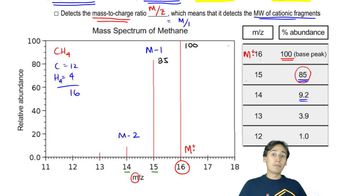
Mass spectrometry is an analytical technique used to measure the mass-to-charge ratio of ions. It helps identify the composition of a sample by producing a mass spectrum, which displays the masses of the components. In organic chemistry, it is often used to determine the molecular weight and structure of compounds, including the presence of specific elements like halogens.
추천 영상:
01:25
How to Read a Mass Spectrum

Isotopic Patterns of Halogens

Halogens such as chlorine and bromine have characteristic isotopic patterns that are visible in mass spectra. Chlorine has two main isotopes, 35Cl and 37Cl, with a natural abundance ratio of about 3:1, while bromine has 79Br and 81Br with a 1:1 ratio. These patterns create distinct peaks in the mass spectrum, aiding in the identification of the specific halogen present.
추천 영상:
08:06
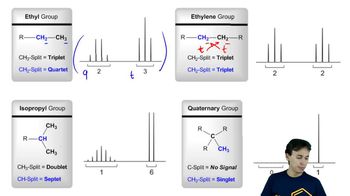
Common Splitting Patterns

Fragmentation in Mass Spectrometry

Fragmentation is the process by which a molecule breaks into smaller pieces in a mass spectrometer. This occurs after ionization and can provide structural information about the molecule. The pattern of fragmentation, including the presence of specific fragment ions, can help identify functional groups and elements, such as halogens, within the molecule.
추천 영상:
01:25
How to Read a Mass Spectrum