Ch. 15 - Structural Identification 2: Nuclear Magnetic Resonance Spectroscopy
Mullins - Organic Chemistry: A Learner Centered Approach 1st Edition
Mullins1st EditionOrganic Chemistry: A Learner Centered ApproachISBN: 9780137566471당신이 사용하는 게 아니라요?교과서 변경
14장, 문제 50b

Assign each signal in the ¹³C NMR spectra to the molecule shown.
(b) <IMAGE>

검증된 단계별 안내
1
Begin by examining the molecular structure provided. Identify the different types of carbon environments present in the molecule. Each unique carbon environment will correspond to a distinct signal in the ¹³C NMR spectrum.
Consider the hybridization of each carbon atom. Carbons can be sp³, sp², or sp hybridized, and this affects their chemical shift in the NMR spectrum. Typically, sp³ hybridized carbons appear at lower chemical shifts, while sp² and sp hybridized carbons appear at higher chemical shifts.
Look for symmetry in the molecule. Symmetrical molecules may have equivalent carbon atoms that produce the same signal in the NMR spectrum. Identify any such equivalent carbons.
Consider the electronegativity of atoms or groups attached to each carbon. Electronegative atoms or groups can deshield the carbon, causing its signal to appear at a higher chemical shift. Analyze the proximity of each carbon to electronegative atoms or groups.
Finally, match each carbon environment to the corresponding signal in the ¹³C NMR spectrum based on the chemical shift values. Use known chemical shift ranges for different types of carbon environments to make these assignments.

비슷한 문제에 대한 검증된 영상 답변:

이 영상 해법은 위 문제에 도움이 된다고 튜터들이 추천한 것입니다.

주요 개념

질문에 올바르게 답하기 위해 반드시 이해해야 하는 핵심 개념들은 다음과 같습니다.

¹³C NMR Spectroscopy

¹³C NMR spectroscopy is a technique used to determine the structure of organic compounds by analyzing the magnetic environment of carbon atoms. Each carbon atom in a molecule can produce a distinct signal in the NMR spectrum, depending on its electronic environment. This method is crucial for identifying the number and types of carbon environments in a compound.
추천 영상:
10:06
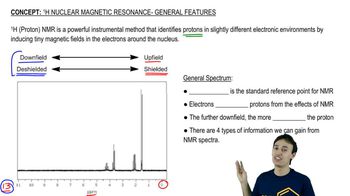
General NMR Features

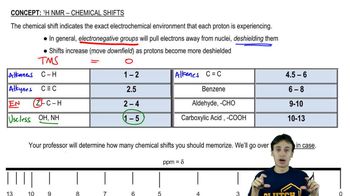
Chemical Shift

Chemical shift in NMR spectroscopy refers to the resonant frequency of a nucleus relative to a standard in a magnetic field. It provides information about the electronic environment surrounding a nucleus. In ¹³C NMR, chemical shifts are influenced by factors such as electronegativity of nearby atoms and hybridization, helping to distinguish between different carbon environments in a molecule.
추천 영상:
11:44
1H NMR Chemical Shifts

Signal Assignment

Signal assignment in NMR involves correlating each peak in the spectrum to a specific atom or group of atoms in the molecule. This process requires understanding the chemical shift values and the molecular structure. By analyzing the number of signals and their chemical shifts, one can deduce which carbon atoms correspond to which signals, aiding in the structural elucidation of the compound.
추천 영상:
02:02
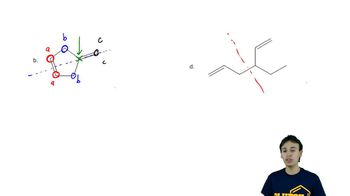
Identifying Proton Signals