교과서 질문
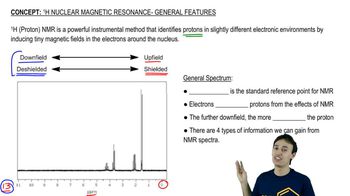
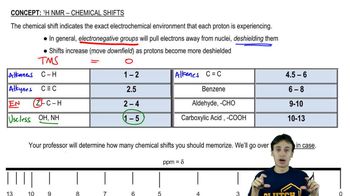
Draw a spectrum for each of the following molecules, being sure to indicate the multiplicity, integration, and chemical shift of each peak. Label each signal based on the set of equivalent hydrogens to which it corresponds.
(b)
1047
views

 Mullins 1st EditionCh. 15 - Structural Identification 2: Nuclear Magnetic Resonance Spectroscopy문제 35c
 검증된 단계별 안내
 10:06
10:06
 11:44
11:44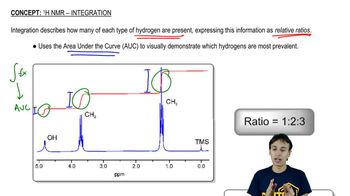 06:46
06:46Draw a spectrum for each of the following molecules, being sure to indicate the multiplicity, integration, and chemical shift of each peak. Label each signal based on the set of equivalent hydrogens to which it corresponds.
(b)
A chemist made what was thought to be compound A or B. How could coupling constants between Ha and Hb be used to distinguish between the two isomers? [Hint: Draw a chair conformation of each.]
Being able to recognize patterns of integration and multiplicity for common functional groups makes structure identification more efficient. Draw the pattern of integration and multiplicity you'd expect to see for each common alkyl group.
(d)
Alkene hydrogens usually appear at similar chemical shifts between 5 and 6 ppm. The alkene hydrogens in the structure shown are very different. Rationalize the difference in chemical shifts between Hₐ and H₆ in the structure shown.
Being able to recognize patterns of integration and multiplicity for common functional groups makes structure identification more efficient. Draw the pattern of integration and multiplicity you'd expect to see for each common alkyl group.
(c)
What coupling constant would you expect between Hₐ and H₆ in cyclopent-2-en-1-one?