Ch. 21 - Conjugated Systems 1: Stability and Addition Reactions
Mullins - Organic Chemistry: A Learner Centered Approach 1st Edition
Mullins1st EditionOrganic Chemistry: A Learner Centered ApproachISBN: 9780137566471당신이 사용하는 게 아니라요?교과서 변경
20장, 문제 33

a. Could a nucleophile ever add to C₃?
b. Why or why not?
Nucleophile adds to carbonyl compound at C₃, arrow indicates reaction outcome query.

검증된 단계별 안내
1
Step 1: Understand the concept of a nucleophile. A nucleophile is a chemical species that donates an electron pair to form a chemical bond in relation to a reaction. Nucleophiles are typically rich in electrons and are attracted to positively charged or electron-deficient areas.
Step 2: Identify the structure of the molecule in question. C₃ refers to the third carbon in a given organic molecule. To determine if a nucleophile can add to C₃, we need to consider the electronic environment around this carbon.
Step 3: Analyze the electronic environment of C₃. If C₃ is part of a functional group that is electron-deficient, such as a carbonyl group (C=O), it may be susceptible to nucleophilic attack. Conversely, if C₃ is surrounded by electron-donating groups, it may be less likely to attract nucleophiles.
Step 4: Consider steric factors. Even if C₃ is electron-deficient, steric hindrance (the crowding of atoms around C₃) can prevent a nucleophile from accessing it. Evaluate the surrounding atoms or groups to determine if they might block the nucleophile's approach.
Step 5: Evaluate resonance and conjugation effects. If C₃ is part of a conjugated system, resonance can stabilize the electron deficiency, making it more or less reactive to nucleophiles. Consider how resonance structures might affect the electron density at C₃.

비슷한 문제에 대한 검증된 영상 답변:

이 영상 해법은 위 문제에 도움이 된다고 튜터들이 추천한 것입니다.
영상 길이:
4m
도움이 되었나요?

주요 개념

질문에 올바르게 답하기 위해 반드시 이해해야 하는 핵심 개념들은 다음과 같습니다.

Nucleophiles

Nucleophiles are species that donate an electron pair to form a chemical bond in reaction mechanisms. They are typically negatively charged or neutral molecules with lone pairs of electrons, such as OH⁻, NH₃, or H₂O. Understanding nucleophiles is crucial for predicting their behavior in organic reactions, especially in addition reactions.
추천 영상:
08:27
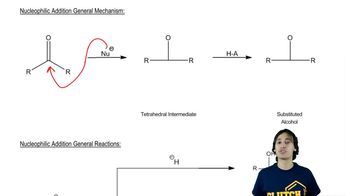
Nucleophilic Addition

Electrophilic Centers

Electrophilic centers are atoms or regions in a molecule that are electron-deficient and can accept electron pairs from nucleophiles. These centers are often positively charged or polarized, making them attractive to nucleophiles. Identifying electrophilic centers is essential for understanding where nucleophiles might add in a molecule.
추천 영상:
03:
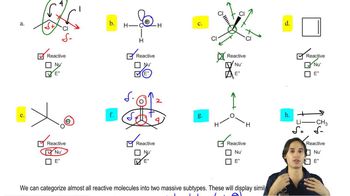
Nucleophile or Electrophile

Molecular Structure and Reactivity

The structure of a molecule, including the arrangement of atoms and the presence of functional groups, influences its reactivity and the likelihood of nucleophilic addition. Factors such as steric hindrance, electronic effects, and resonance can affect whether a nucleophile can add to a specific carbon, like C₃, in a molecule. Analyzing these factors helps predict reaction outcomes.
추천 영상:
08:41
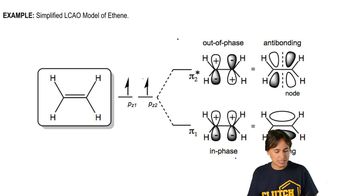
Review of Molecular Orbitals