Ch. 24 - Benzene 2: Reactions Influenced by the Aromatic Ring
Mullins - Organic Chemistry: A Learner Centered Approach 1st Edition
Mullins1st EditionOrganic Chemistry: A Learner Centered ApproachISBN: 9780137566471당신이 사용하는 게 아니라요?교과서 변경
23장, 문제 46

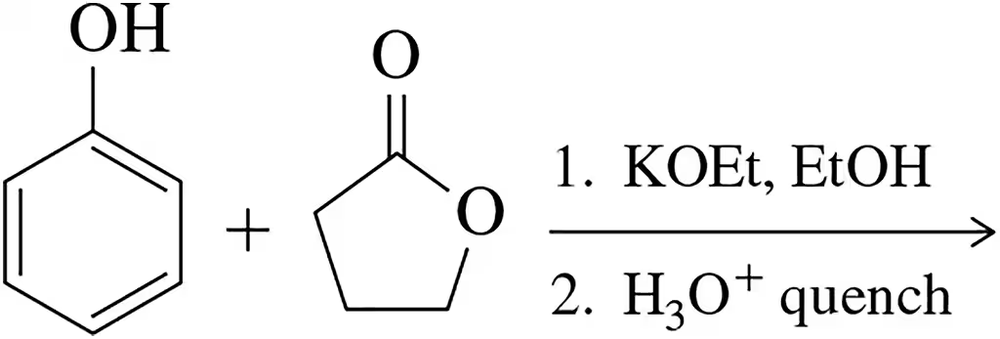
The following reaction proceeds in good yield, despite requiring high temperature and high concentration. Identify the product you’d expect to obtain in this reaction.

검증된 단계별 안내
1
Identify the reactants: The reaction involves phenol (C6H5OH) and gamma-butyrolactone (a cyclic ester).
Recognize the reaction type: This is similar to the Kolbe-Schmitt reaction, where phenol reacts with carbon dioxide in the presence of a base to form salicylic acid. Here, the base is potassium ethoxide (KOEt) in ethanol.
Understand the mechanism: The phenol will be deprotonated by the strong base (KOEt) to form phenoxide ion, which is a strong nucleophile.
Nucleophilic attack: The phenoxide ion will attack the carbonyl carbon of the gamma-butyrolactone, opening the lactone ring and forming a carboxylate intermediate.
Acidic quench: The reaction mixture is then quenched with an acid (H3O+), which will protonate the carboxylate to form the final carboxylic acid product.

비슷한 문제에 대한 검증된 영상 답변:

이 영상 해법은 위 문제에 도움이 된다고 튜터들이 추천한 것입니다.

주요 개념

질문에 올바르게 답하기 위해 반드시 이해해야 하는 핵심 개념들은 다음과 같습니다.

Nucleophilic Acyl Substitution

Nucleophilic acyl substitution is a fundamental reaction in organic chemistry where a nucleophile attacks a carbonyl carbon, leading to the substitution of a leaving group. In this case, the phenol (with -OH) acts as a nucleophile, attacking the carbonyl carbon of the cyclic anhydride. This reaction is crucial for forming esters or amides from carboxylic acids or their derivatives.
추천 영상:
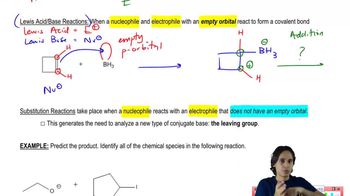
01:47
Nucleophiles and Electrophiles can react in Substitution Reactions.

Role of Base in Reactions

In organic reactions, bases like KOEt (potassium ethoxide) are often used to deprotonate alcohols or phenols, enhancing their nucleophilicity. This step is essential for facilitating the nucleophilic attack on the carbonyl compound. The use of a strong base in this reaction indicates that the reaction may proceed more efficiently under high temperature and concentration conditions.
추천 영상:
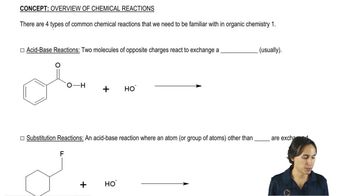
02:43
Recognizing Acid-Base Reactions.

Quenching Reactions

Quenching is a process used to stop a chemical reaction, typically by adding a reagent that neutralizes the reactive species. In this case, the addition of H3O+ after the reaction serves to protonate any remaining nucleophiles and stabilize the product. This step is crucial for ensuring that the desired product is obtained in a stable form and to prevent further reactions that could lead to side products.
추천 영상:
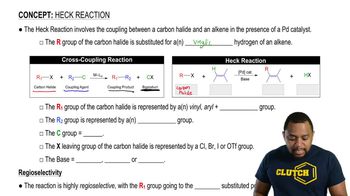
05:09
Heck Reaction