Ch. 24 - Benzene 2: Reactions Influenced by the Aromatic Ring
Mullins - Organic Chemistry: A Learner Centered Approach 1st Edition
Mullins1st EditionOrganic Chemistry: A Learner Centered ApproachISBN: 9780137566471당신이 사용하는 게 아니라요?교과서 변경
23장, 문제 9

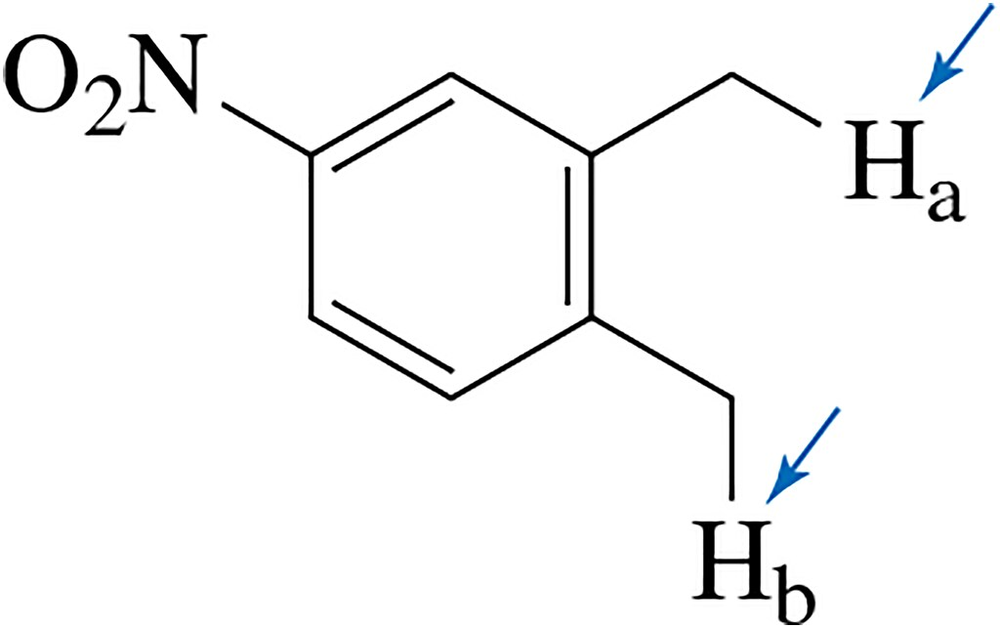
Which proton, Ha or Hb, would you expect to have the lower pKa value?
Chemical structure showing two protons, Hₐ and H_b, with arrows indicating their positions for acidity comparison.

검증된 단계별 안내
1
Step 1: Understand the relationship between pKa and acidity. The pKa value is inversely related to the acidity of a proton. A lower pKa value indicates a more acidic proton.
Step 2: Analyze the chemical environment of Hₐ and H_b. Consider factors such as electronegativity of nearby atoms, resonance stabilization, and inductive effects that can influence the acidity of each proton.
Step 3: Evaluate resonance effects. If the removal of a proton leads to a conjugate base that is resonance-stabilized, the proton is likely to be more acidic and have a lower pKa value.
Step 4: Consider inductive effects. Electronegative atoms or groups near the proton can withdraw electron density, making the proton more acidic and lowering its pKa value.
Step 5: Compare the environments of Hₐ and H_b based on the above factors to determine which proton is more acidic and thus has the lower pKa value.

비슷한 문제에 대한 검증된 영상 답변:

이 영상 해법은 위 문제에 도움이 된다고 튜터들이 추천한 것입니다.
영상 길이:
5m

주요 개념

질문에 올바르게 답하기 위해 반드시 이해해야 하는 핵심 개념들은 다음과 같습니다.

pKₐ and Acidity

pKₐ is a measure of the acidity of a proton in a molecule, with lower pKₐ values indicating stronger acids. The pKₐ value reflects the tendency of a proton to dissociate from its parent molecule. Understanding the relationship between pKₐ and acidity is crucial for predicting which proton is more likely to be released in a chemical reaction.
추천 영상:
02:23
Using factors affecting acidity to rank acids

Proton Position and Stability

The position of a proton in a molecule can significantly influence its acidity. Protons attached to more electronegative atoms or those that are part of a resonance-stabilized structure tend to have lower pKₐ values. Analyzing the molecular structure helps determine which proton is more stable when dissociated, thus affecting its acidity.
추천 영상:
05:58
Determining Carbocation Stability

Resonance and Inductive Effects

Resonance and inductive effects can stabilize the conjugate base formed after a proton is lost, leading to lower pKₐ values. If the removal of a proton results in a resonance-stabilized anion or is influenced by electronegative substituents, the corresponding proton will be more acidic. Understanding these effects is essential for predicting the relative acidity of protons in different environments.
추천 영상:
01:47
Understanding the Inductive Effect.